

Meet Navi: Your 24/7 AI Instructor Inside the MLS Classroom
Unlock 24/7 access to Navi, an AI instructor trained on MLS course material, so you can ask questions, run practice quizzes, and nail your captain’s exam.
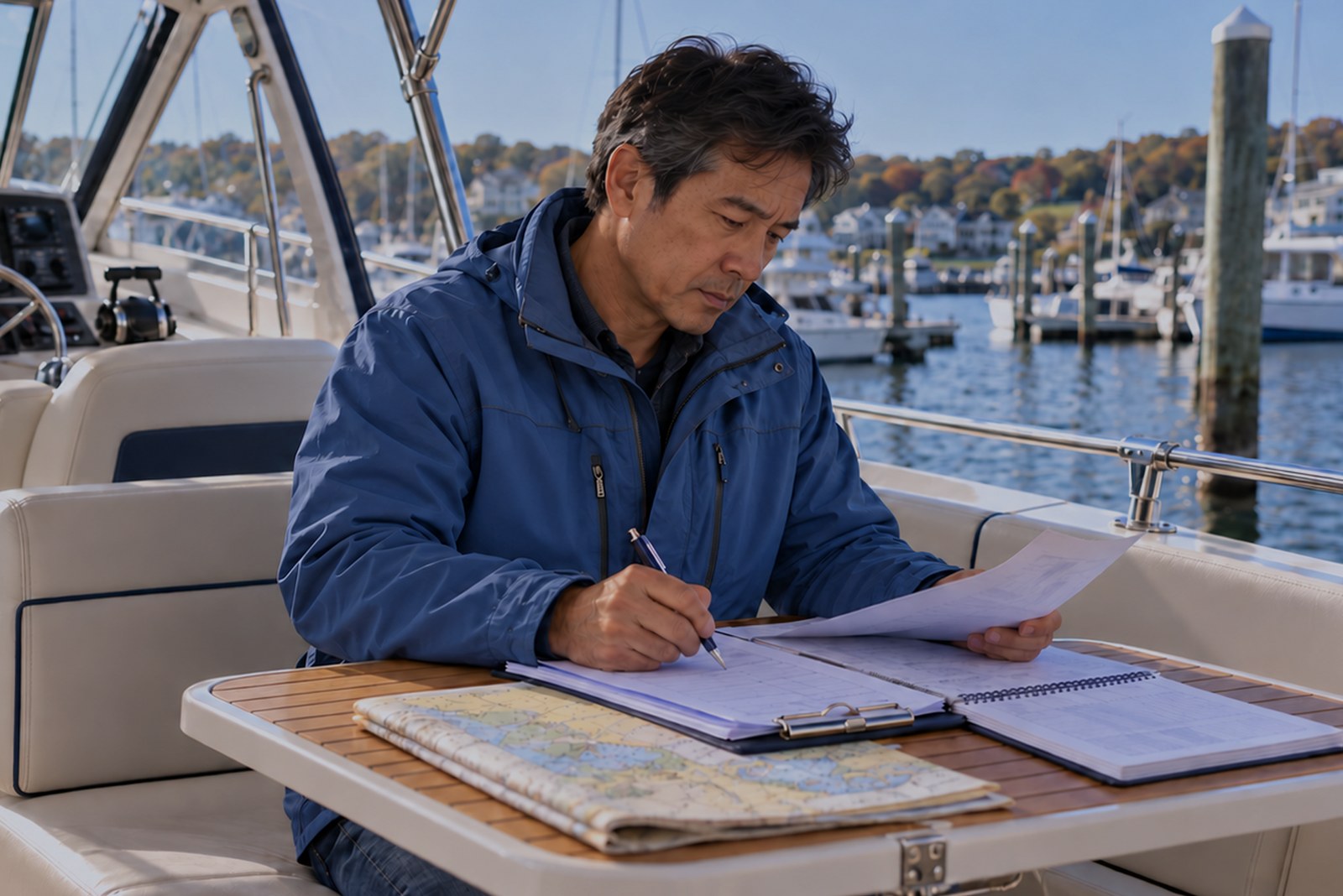

A U.S. Coast Guard (USCG) captain’s license requires U.S. citizenship, a minimum age of 18 or 19 depending on license type, at least 360 days of documented sea service, a physical exam, a passed drug test, a Transportation Worker Identification Credential (TWIC), CPR/first-aid certification, and completion of an approved training course with exam.
Every aspiring captain has the same first question: Do I actually qualify? The answer, for most people, is yes. The eligibility checklist is specific, but none of it is out of reach for someone who’s willing to put in the time.
The real challenge isn’t the requirements themselves. It’s knowing exactly what they are before you start, so nothing catches you off guard months into the process.

The USCG sets different minimum ages for each license type, and you must meet the age requirement on the day you submit your application to the National Maritime Center (NMC), the office that processes all Merchant Mariner Credentials (MMCs). For the OUPV/Six-Pack captain’s license, the minimum age is 18; for the 25/50/100-Ton Master captain’s license, it’s 19.
There’s no maximum age. The Coast Guard cares about whether you can meet the medical and physical fitness standards, not how many birthdays you’ve had.
|
Requirement |
OUPV/Six-Pack |
Master (25/50/100-Ton) |
|
Minimum Age |
18 |
19 |
|
Minimum Sea Service |
360 days |
360 days |
|
U.S. citizen (lawful permanent resident exception for undocumented vessels) |
U.S. citizen |
|
|
CG-719K |
CG-719K |
|
|
Drug Test |
DOT 5-panel |
DOT 5-panel |
|
Required |
Required |
|
|
Written Exam |
4 modules |
5 modules |
|
Completed up to 12 months before you submit your application |
Completed up to 12 months before you submit your application |
You can begin studying and logging sea time before your 18th birthday. Sea service counted toward your license can include time on the water dating back to age 16, per the NMC application checklist. You just can’t submit the application itself until you hit the minimum age.
Mariners Learning System’s students have access to the program for one year. Then, after they pass the exam, their certificate is valid for one year. As long as you test with us on your 17th birthday or later, you can submit for the OUPV on your 18th birthday.
Mariners students can also apply for the OUPV on their 18th birthday, then upgrade to the Master’s as a second step on their 19th birthday.
OUPV/Six-Pack and Master endorsements require U.S. citizenship under 46 CFR 10.221. A narrow exception exists for lawful permanent residents (LPRs) seeking an OUPV endorsement limited to undocumented vessels only.
If you’re a U.S. citizen, this requirement is straightforward. Bring a valid U.S. passport, birth certificate, or naturalization certificate with your application.
If you’re a lawful permanent resident interested in the OUPV path, read more about the citizenship requirement to understand the specific carve-out.
No. The Master endorsement (25/50/100-Ton) requires U.S. citizenship. The only LPR exception applies to the OUPV endorsement on vessels that aren’t documented under U.S. law.
Lawful permanent residents can apply for the OUPV, then upgrade to the Master’s after becoming a citizen.
Sea service is the experience requirement: documented time operating or serving on a vessel. The NMC checklist requires a minimum of 360 days of documented sea service since age 16 for the OUPV/Six-Pack. For the Master Inland license, the requirement is 360 days; for the Master Near Coastal, it’s 720 days with at least 360 on near-coastal or ocean waters.
At least 90 of those days must fall within the last seven years, per an updated USCG policy letter issued in September 2025. Before that update, the recency window was three years.
You’ll document this time using the Small Vessel Sea Service Form CG-719S, one form per vessel. Personal boating time counts, and so does commercial time and military service.
The key is documentation: dates, vessel information, and the nature of the voyages, all with the vessel owner’s or operator’s signature.
Yes. Personal time on your own boat counts. You’ll need to document it on CG-719S with supporting proof such as vessel registration, insurance, or other proof of ownership. The NMC may ask for corroborating documentation if the claimed time is extensive.
The Coast Guard requires a medical exam documented on CG-719K, the Application for Medical Certificate. It must be completed by a U.S.-licensed physician, physician’s assistant, or nurse practitioner, per 46 CFR 10.302(b). The exam covers vision, hearing, general physical health, and a review of your medical history; the completed form is valid for 12 months from the exam date.
Certain medical conditions can delay or disqualify an application, including uncontrolled diabetes, seizure disorders, and color vision deficiency. Waivers and limitations exist for many conditions under 46 CFR 10.303. If you have a pre-existing condition, it’s worth contacting the NMC Medical Helpdesk before your appointment to understand what documentation they’ll need.
A common source of delays isn’t medical conditions. It’s paperwork errors on the captain’s license physical. Missing signatures, outdated forms, and incomplete sections send applications to the bottom of the pile.
Every captain’s license applicant must pass a DOT 5-panel urine drug test, a federal screening that checks for marijuana, cocaine, amphetamines, opiates, and PCP. The test must be collected by a SAMHSA-certified lab, reviewed by a Medical Review Officer (MRO), and submitted within six months of your application date, per the NMC application checklist.
The drug test is federal, which means state laws legalizing recreational marijuana don’t apply. If THC shows up in your sample, you fail. We cover this in detail in our guide to the MMC drug test.
A Transportation Worker Identification Credential (TWIC) is a biometric ID card issued by the Transportation Security Administration (TSA) after a security threat assessment, including fingerprinting and a background check. All captain’s license applicants must provide evidence they’ve obtained or applied for a TWIC before the NMC will process their application.
You can apply at a TWIC enrollment center. The card is valid for five years. If you already hold a TWIC from a previous job (such as work at a port or maritime facility), you can use it for your license application as long as it’s current.
Learn more about the TWIC requirement for your captain’s license.
If you only use your license recreationally and don’t access secure maritime facilities, you may be eligible for an exemption. But you still must obtain a TWIC (or apply for one) as part of your initial application. The Coast Guard won’t process your packet without it.
Current Adult CPR and Basic First Aid certifications are required as part of your application packet. The First Aid course must be completed within one year of submitting your application. These certifications are widely available through the American Red Cross, American Heart Association, and other providers.
This is one of the simplest requirements on the list, but it does trip up applicants who schedule their CPR course too early and let it expire before submitting.
Check the full application requirements checklist to make sure your certifications line up with your submission timeline.
The licensing exam is closed-book and proctored. For the OUPV/Six-Pack, it covers four modules: Rules of the Road, Chart Plotting, Navigation General, and Deck General. For the Master, a fifth module called the Master’s Upgrade is added.
Completing a USCG-approved course, like those offered by Mariners Learning System, satisfies the written-exam requirement without testing at a Coast Guard Regional Exam Center.
At Mariners, the exam is included in the course price with no separate testing fee. You study at your own pace, then take the proctored exam online when you’re ready.
If you’re unsure which license type fits your goals, start there. The eligibility requirements overlap significantly, but the sea service and exam modules differ.
You have one year from enrollment to complete the MLS course and pass the final exam. After passing, you have one year to submit your application to the Coast Guard with your Certificate of Completion.
Most people who look into a captain’s license already meet more eligibility requirements than they realize. If you’ve spent time on the water, have a clean health record, and hold U.S. citizenship, the path is laid out clearly. The work is in the preparation, not in overcoming some hidden barrier.
If you have questions about eligibility or any part of the application process, the team at Mariners Learning System is here to help. We’ve guided more than 200,000 students through this process. Don’t let paperwork be the reason you don’t get your license.

Ask a question, share an experience, or add a helpful tip related to this article. Comments may appear after review to prevent spam.
Unlock 24/7 access to Navi, an AI instructor trained on MLS course material, so you can ask questions, run practice quizzes, and nail your captain’s exam.


Learn what questions to ask and how to prepare for a captain’s license drug test to ensure you avoid the most common application delays.
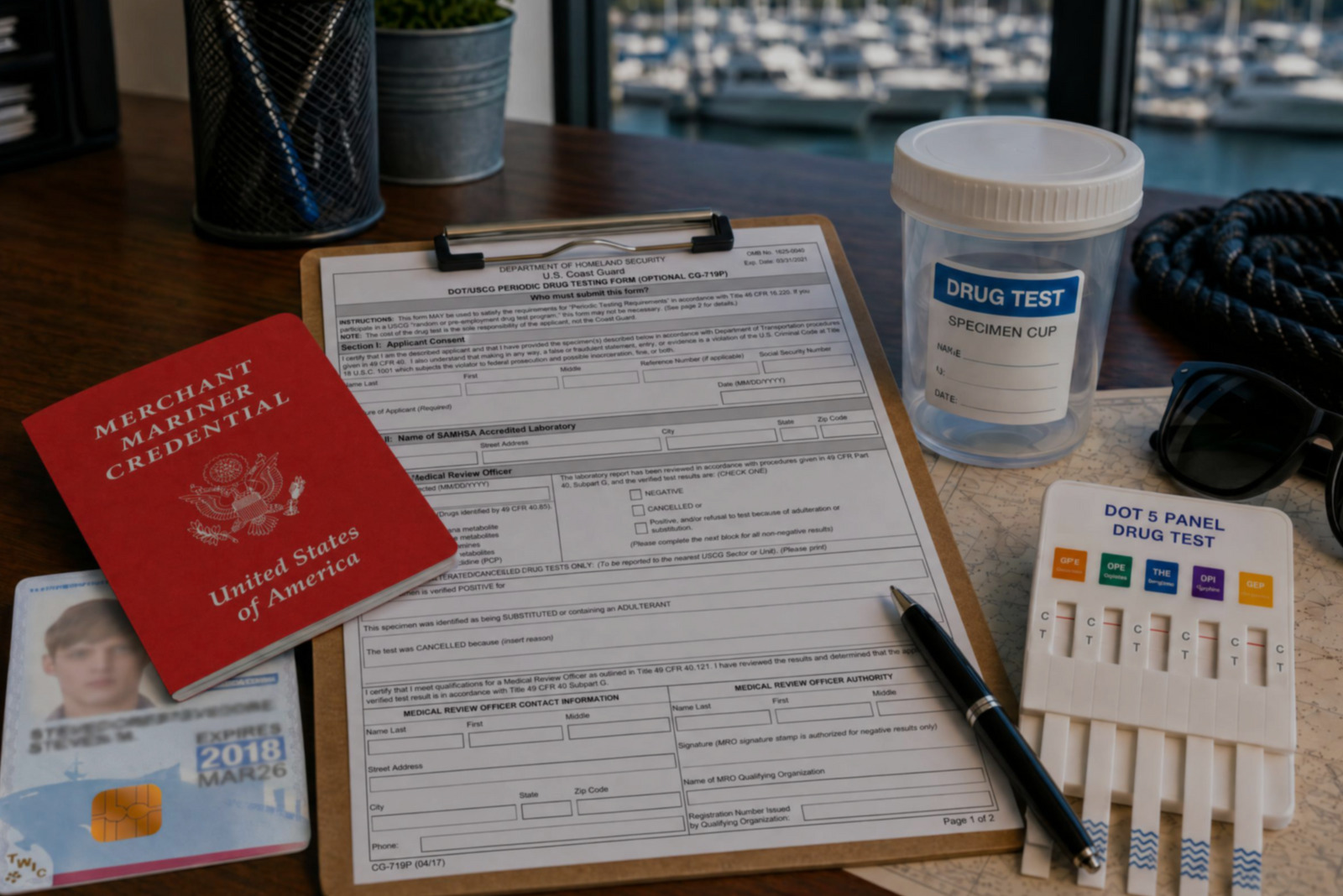

Discover the three types of drug tests working captains must submit to even after they’ve met the initial USCG drug testing requirements for their license.

Discover how a retired airline pilot became obsessed with the Great Loop and built a thriving captain training business through Mariners Learning System.


Learn which substances the MMC drug test looks for, plus how masking agents and false positives factor in.


Discover the five most common mistakes mariners make on the captain’s license physical, plus a checklist for how to avoid them.
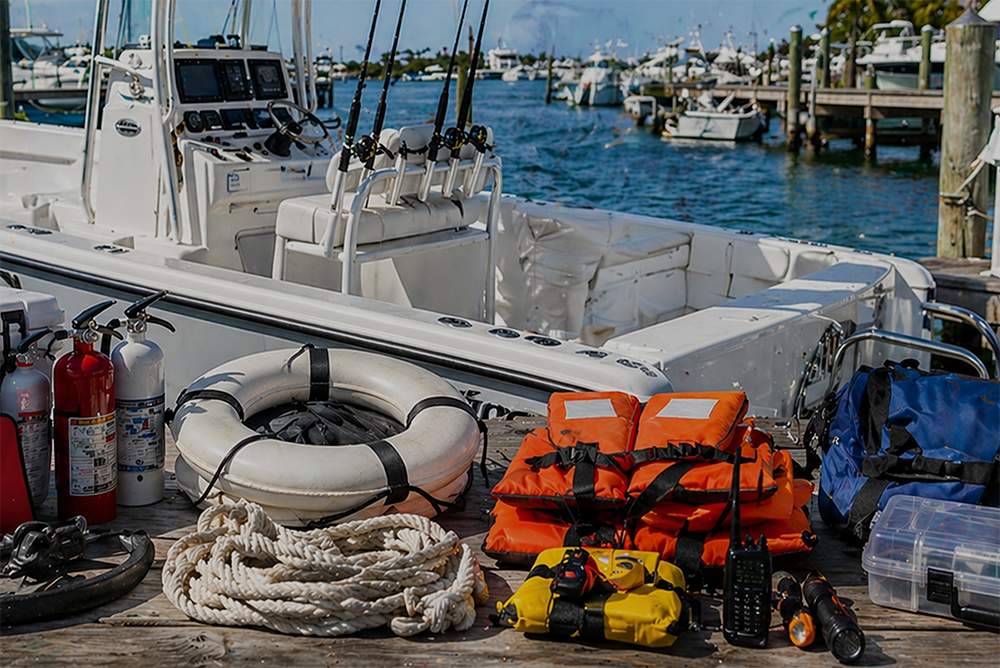

Discover why so many charter captains run out of money and how to plan every startup cost from your vessel purchase to guest-ready outfitting.
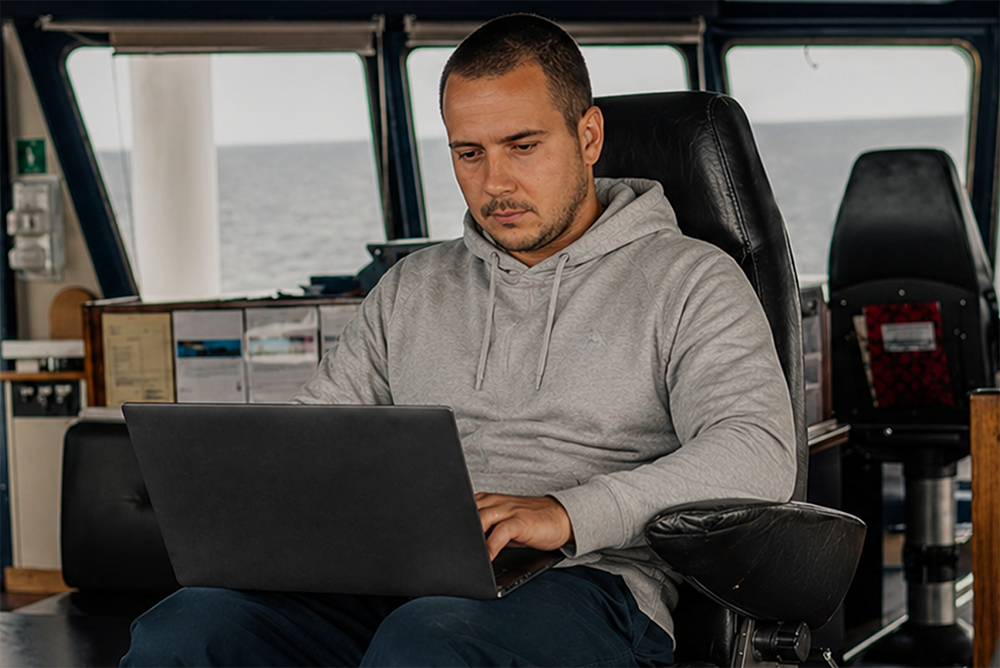

Learn how to build a charter business plan that covers pricing, expenses, and marketing so your captain’s license leads to lasting profit.
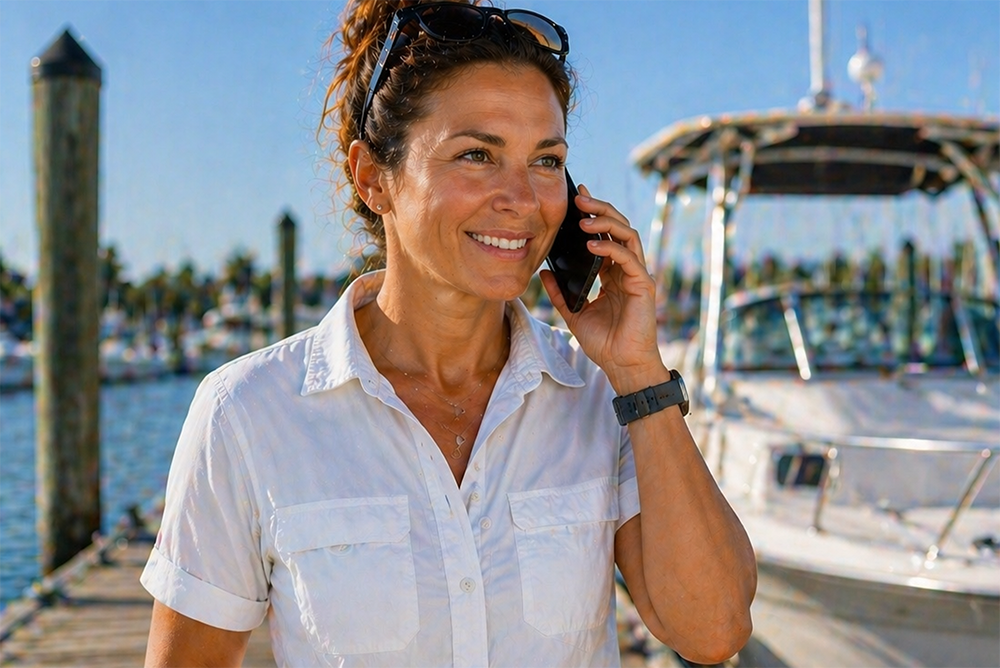

Transform how you talk about price with proven anchoring strategies and value-first framing that stops charter guests from shopping around.
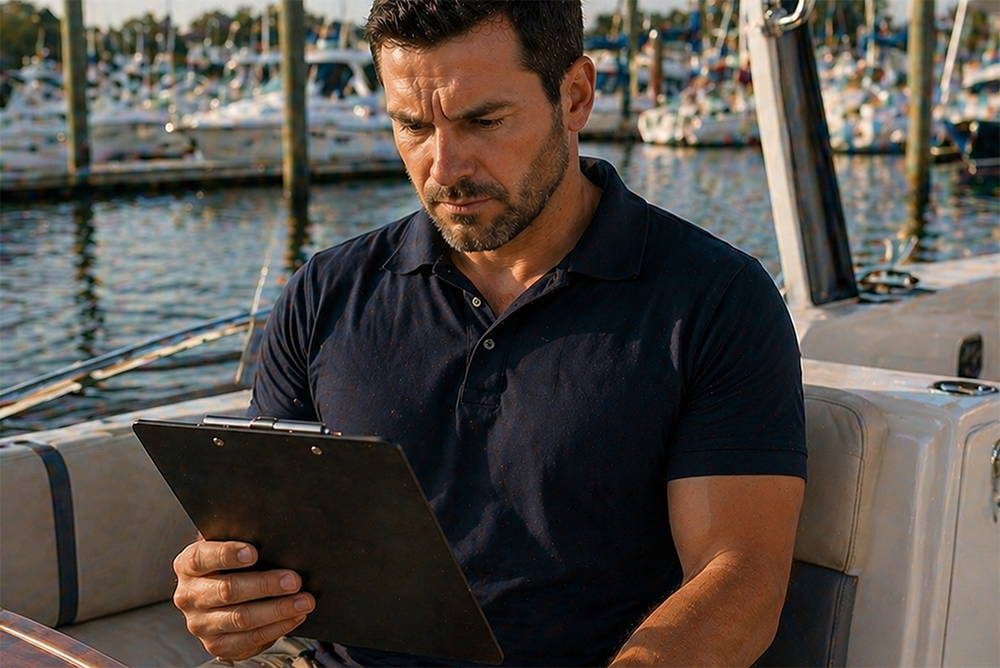

Discover how charter captains use hybrid pricing models and seasonal adjustments to increase revenue and simplify bookings for every guest type.