

Meet Navi: Your 24/7 AI Instructor Inside the MLS Classroom
Unlock 24/7 access to Navi, an AI instructor trained on MLS course material, so you can ask questions, run practice quizzes, and nail your captain’s exam.


A past criminal conviction does not automatically disqualify you from earning a captain’s license. The Coast Guard reviews each applicant’s record individually under 46 CFR 10.211, applying assessment periods that range from one to 20 years depending on the offense. Full disclosure on form CG-719C is required. Hiding a conviction is treated as a fraudulent application and will result in denial.
We hear this question more than you’d expect at Mariners Learning System: “Can I get a captain’s license if I have a record?” The anxiety is understandable. A past mistake feels like it could close the door on a new career, and nobody wants to invest in a course only to get rejected at the finish line.
Here’s the bottom line: the Coast Guard doesn’t ask whether you’re a perfect person. They ask whether you’re a safe one. They have a structured process for making that determination.

The Coast Guard defines “conviction” much more broadly than most people expect. Under 46 CFR 10.211, a conviction includes any situation where an applicant for a Merchant Mariner Credential (MMC), the official name for a captain’s license, was found guilty by judgment or plea in any U.S. court, foreign court, or military court. That covers felonies, misdemeanors, and offenses under the National Driver Register Act (49 U.S.C. 30304).
The definition also includes deferred adjudication, court-ordered classes, community service, probation, treatment programs, or any plea of guilty or no contest. If a court required you to take any action in response to a charge, the Coast Guard considers it a conviction.
A later expungement does not erase the conviction in the Coast Guard’s eyes, unless the expungement was based on proving the original sentence was in error. An expungement means the conviction won’t follow you in civilian life. It doesn’t mean it disappears from the background check the Coast Guard runs on every applicant.
Yes. The Coast Guard asks whether a conviction ever occurred, not whether it still appears on your civilian record. Report it on form CG-719C, the Disclosure Statement for Convictions, regardless of expungement status.
Every applicant for a captain’s license goes through a Safety and Suitability Evaluation (SSE) conducted by the NMC. This evaluation uses data from your Transportation Worker Identification Credential (TWIC) enrollment, which includes fingerprints and an FBI criminal records check. The Coast Guard also checks the National Driver Registry (NDR) for DUI or reckless driving convictions.
If any conviction in your past meets the Coast Guard’s definition, the SSE will find it. The background check covers federal, state, military, and foreign courts. Assume the Coast Guard already knows the answer to every question on the application.
Not reporting a conviction means the Coast Guard will treat your application as fraudulent, which is far worse than the conviction itself.
The single most important step you can take is to disclose every conviction honestly on CG-719C and include supporting court documents with your application.
Include court papers documenting the offense, financial penalties, and any sentences served. Proof of completed rehabilitation programs, counseling, or community service strengthens your case. The more documentation you provide upfront, the less likely the NMC is to send you an “Awaiting Information” letter.
The Coast Guard uses Table 1 in 46 CFR 10.211 to set minimum and maximum assessment periods for different categories of offenses. These are guidelines, not automatic disqualifications. The assessment period is the window during which the Coast Guard will scrutinize your application more closely.
|
Offense Category |
Minimum Assessment Period |
Maximum Assessment Period |
|
Homicide (Intentional) |
7 years |
20 years |
|
Homicide (Unintentional) |
5 years |
10 years |
|
Assault (Aggravated) |
5 years |
10 years |
|
Assault (Simple) |
1 year |
5 years |
|
Sexual Assault |
5 years |
10 years |
|
Robbery |
5 years |
10 years |
|
Reckless Driving |
1 year |
2 years |
|
Destruction of Property |
5 years |
10 years |
Partial list. Source: Table 1 to 46 CFR 10.211. The full table includes additional categories (dangerous drug offenses, firearms violations, and others). If your offense doesn’t appear here, the Coast Guard will establish an appropriate assessment period using the table as a guide.
If you apply before the minimum assessment period has elapsed, you must include evidence of rehabilitation with your application. If you apply between the minimum and maximum periods, the Coast Guard will generally approve your application unless offsetting factors (like multiple convictions or failure to comply with court orders) exist. After the maximum period, the conviction alone won’t prevent approval.
A single felony does not automatically disqualify you. Each case is reviewed individually. The Coast Guard considers the nature of the offense, how much time has passed, evidence of rehabilitation, and whether the offense connects to the safe operation of a vessel. Disclose the felony on form CG-719C, include all court documentation, and let the application process run its course.

Drug convictions carry extra weight because federal law specifically bars anyone convicted of a dangerous drug law violation from holding an MMC, unless they can prove rehabilitation under 46 CFR 10.211(l). “Dangerous drugs” under federal law include marijuana, cocaine, amphetamines, opiates, and PCP, the same five substances on the DOT 5-panel drug test.
A drug conviction more than 10 years before the date of application won’t, by itself, be grounds for denial. But if you have a second drug conviction within the past 10 years, the Coast Guard can consider the older one, too.
Applicants with drug-related convictions must demonstrate rehabilitation under 46 CFR 10.211(l). The regulation lists specific factors the Coast Guard considers. Examples of evidence that can support your case include:
The NMC’s Criminal Record Brochure summarizes these requirements and is worth reading before you apply.
State marijuana laws don’t matter for a captain’s license. The Merchant Mariner Credential is a federal credential, and marijuana remains illegal under federal law. A positive drug test for THC, or a marijuana-related conviction, is treated the same regardless of your state’s recreational or medical marijuana policies.
The Coast Guard checks the National Driver Registry (NDR) for DUI and reckless driving convictions under 46 CFR 10.213. All applicants must consent to this check.
A single old DUI typically won’t prevent you from getting your license, but you must disclose it. The Coast Guard generally considers NDR offenses within the last three years, unless your driver’s license is currently suspended or revoked. Multiple DUIs or a pattern of alcohol-related offenses will draw closer scrutiny and may require proof of rehabilitation.
Before the Coast Guard denies an application based on NDR findings, the applicant receives the NDR information and an opportunity to respond. This isn’t a surprise ambush; it’s a process you can participate in. Be truthful on every form you fill out, whether you’re applying for an OUPV/Six-Pack or a Master captain’s license.
The criminal record review process is at 46 CFR 10.211. The National Driver Registry review is at 46 CFR 10.213. The NMC also publishes a Criminal Record Brochure summarizing the assessment periods and rehabilitation requirements.
There’s no requirement to hire an attorney, though some applicants with complex histories choose to consult one. Many applicants work directly with a licensing course provider experienced in the application process. The key is honesty and thorough documentation, not legal representation.
Yes. A conviction after issuance can trigger administrative action under 46 CFR Part 5, including suspension or revocation of your credential. Licensed captains are held to a continuing standard of conduct.
The captain’s licensing process is built on trust. The Coast Guard isn’t looking for perfect applicants. They’re looking for honest ones who can be trusted with the safety of passengers and crew. A conviction on your record, disclosed upfront with supporting documentation, is a problem you can work through. A concealed conviction is a problem that ends the conversation.
If you have questions about how your record might affect your captain’s license application, reach out. At Mariners Learning System, we’ve helped more than 200,000 students through the licensing process. We can’t complete your application for you or provide legal advice, but we can help you understand the process and point you in the right direction. Don’t let a past mistake keep you from becoming a licensed captain.
This article provides general information about the Coast Guard’s criminal record review process for captain’s license applicants. It is not legal advice. Consult an attorney for guidance specific to your situation, and confirm all requirements with the National Maritime Center before submitting your application.
Ask a question, share an experience, or add a helpful tip related to this article. Comments may appear after review to prevent spam.
Unlock 24/7 access to Navi, an AI instructor trained on MLS course material, so you can ask questions, run practice quizzes, and nail your captain’s exam.


Learn what questions to ask and how to prepare for a captain’s license drug test to ensure you avoid the most common application delays.
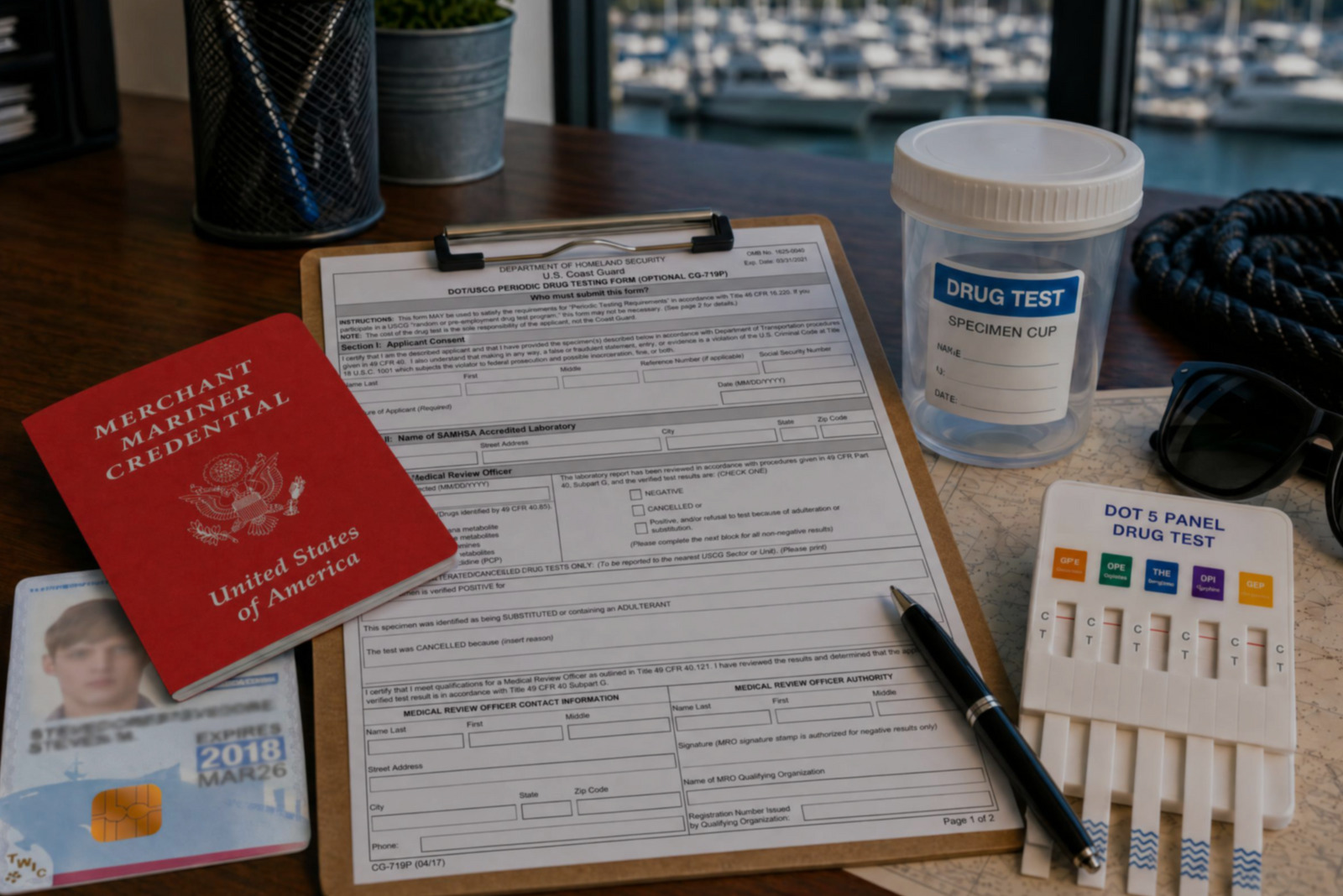

Discover the three types of drug tests working captains must submit to even after they’ve met the initial USCG drug testing requirements for their license.

Discover how a retired airline pilot became obsessed with the Great Loop and built a thriving captain training business through Mariners Learning System.


Learn which substances the MMC drug test looks for, plus how masking agents and false positives factor in.


Discover the five most common mistakes mariners make on the captain’s license physical, plus a checklist for how to avoid them.

Discover why so many charter captains run out of money and how to plan every startup cost from your vessel purchase to guest-ready outfitting.


Learn how to build a charter business plan that covers pricing, expenses, and marketing so your captain’s license leads to lasting profit.


Transform how you talk about price with proven anchoring strategies and value-first framing that stops charter guests from shopping around.


Discover how charter captains use hybrid pricing models and seasonal adjustments to increase revenue and simplify bookings for every guest type.