

Meet Navi: Your 24/7 AI Instructor Inside the MLS Classroom
Unlock 24/7 access to Navi, an AI instructor trained on MLS course material, so you can ask questions, run practice quizzes, and nail your captain’s exam.


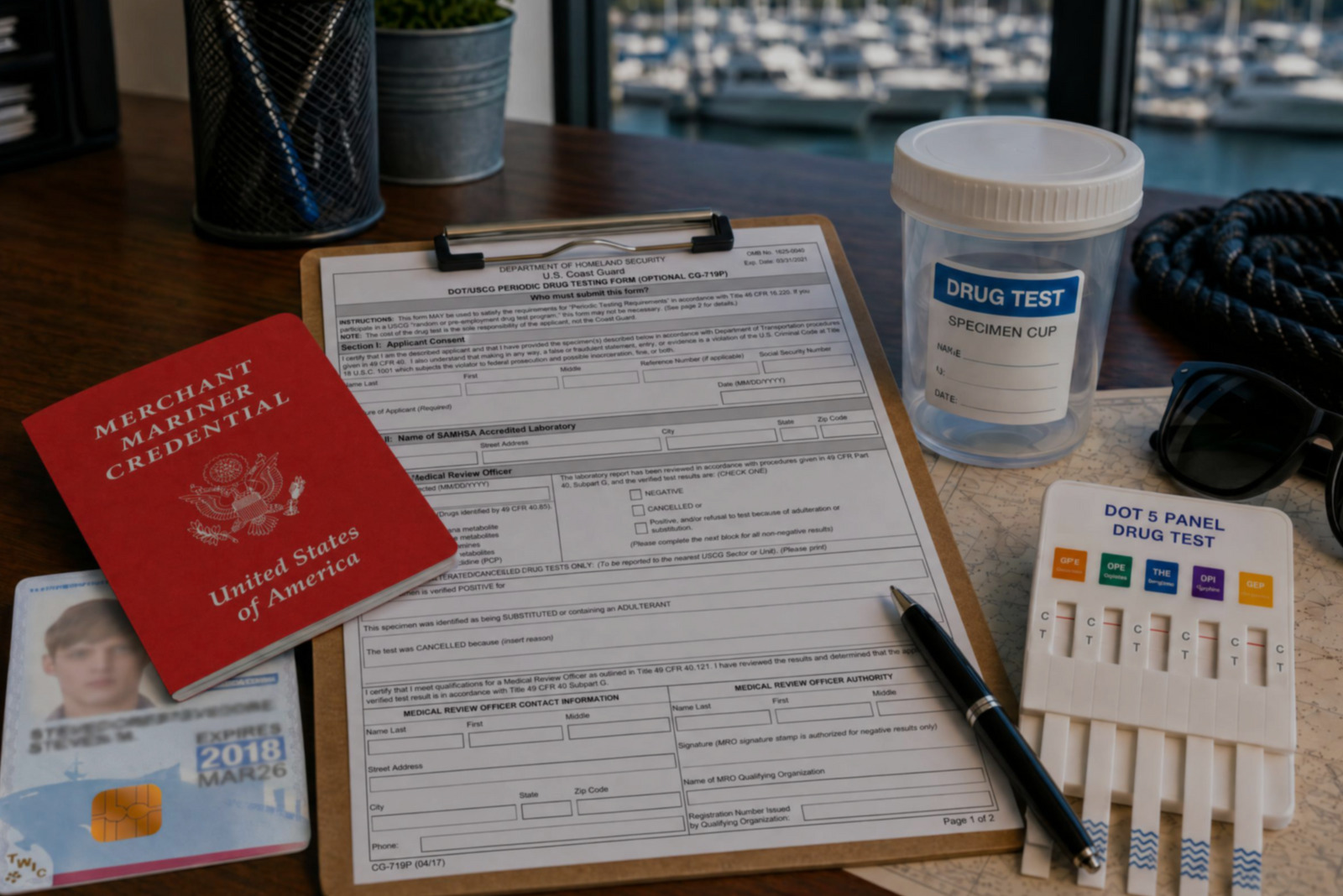
Form CG-719P is the DOT/USCG Periodic Drug Testing form most Mariners Learning System captain’s license students use to document their drug test results. After you complete a DOT 5-panel urine test, the laboratory and Medical Review Officer (MRO) complete their sections. Upload the finished form to your Merchant Mariner Credential application in Navita™ within 185 days of the test under 46 CFR 16.220.
Drug testing paperwork is a common source of delays because the Coast Guard requires the correct test, laboratory, review, signatures, and timing. This guide explains how to complete Form CG-719P, where to upload it in Navita™, and which other documents the National Maritime Center may accept.
Form CG-719P is a federal form used to record the results of a DOT-approved drug test for mariners. The MRO completes and signs it after reviewing your lab results. It’s one of three acceptable ways to document your drug test for the National Maritime Center (NMC), the office that reviews all captain’s license applications.
Form CG-719P gives the NMC the required information in one document: your identity, the test type, the laboratory accreditation, the MRO’s review, and the result. While there are other options, we recommend the CG-719P. It’s the cleanest and easiest because it’s structured to satisfy every NMC requirement in a single document.
A qualifying drug test is required for the captain’s license transactions shown below. CG-719P is the most common way our students document the result, although the Coast Guard accepts certain alternatives.
|
Transaction Type |
Drug Test Required? |
|
Original Application |
Yes |
|
Raise of Grade |
Yes |
|
Renewal |
Yes |
|
Endorsement Addition |
Yes |
|
Increase of Scope |
No |
|
Duplicate MMC |
No |
|
STCW Only |
No |
If you’re applying for your first captain’s license, upgrading from OUPV/Six-Pack to Master, or renewing, include acceptable drug testing documentation with your MMC application.

Form CG-719P has three sections. You complete Section I, while the testing professionals complete the remaining information.
Section I - Applicant Consent: Enter your full legal name, Mariner Reference Number if applicable, Social Security number, signature, and date.
Section II - SAMHSA-Accredited Laboratory: The testing facility or Medical Review Officer enters the name and full address of the SAMHSA-accredited laboratory that analyzed your specimen.
Section III - Medical Review Officer: The certified MRO enters the specimen collection date, confirms the substances tested, records the verified result, provides the required contact and certification information, and signs the form.
Once the MRO completes the form, the lab should send it back to the individual, not the Coast Guard. Then, the applicant can save it using this naming format: LASTNAME_FIRSTNAME_CG719P. That naming isn't required, but it keeps your files organized alongside your other application documents.
Submit the completed CG-719P with your full application packet to the NMC via the online Navita™ portal.
The Coast Guard provides three ways to satisfy the drug testing requirement. Most Mariners Learning System captain’s license students use Option One with Form CG-719P. Options Two and Three generally apply to mariners whose employer or consortium maintains qualifying drug testing records.
|
Option |
Best For |
Key Requirement |
| Option One: Individual test documented on CG-719P | Most MLS captain’s license students, first-time applicants, and applicants without a marine employer | DOT 5-panel test completed within 185 days and reviewed and signed by a certified MRO |
| Option Two: Random testing program letter | Active commercial mariners enrolled through a marine employer or consortium |
Participation in a 46 CFR 16.230 program for at least 60 days during the previous 185 days without a failed or refused test |
| Option Three: Pre-employment testing letter | Recently hired mariners |
Qualifying pre-employment test under 46 CFR 16.210 within the permitted period |
Options Two and Three require specific employer or consortium documentation using the Coast Guard’s prescribed language. If you use either alternative, have the marine employer or consortium follow the current template on the CG-719P instructions or in the NMC’s drug testing guidance.
Your drug test is self-paid. The results come back to you, not to the Coast Guard, so choosing the right facility is your responsibility.
To confirm a facility meets Coast Guard requirements, verify three points before your appointment:
You can search for a local facility through the Foley DOT Collection Site Locator or any search engine. Regional Exam Centers can’t perform the drug test. Before scheduling, call the facility and ask if they offer the DOT 5-panel test with MRO review for a Coast Guard captain’s license. If they aren’t sure what that means, keep looking.

The most common mistake is timing: taking the test too early and letting the 185-day window expire before submitting the application. We recommend scheduling the test in the final weeks of your coursework.
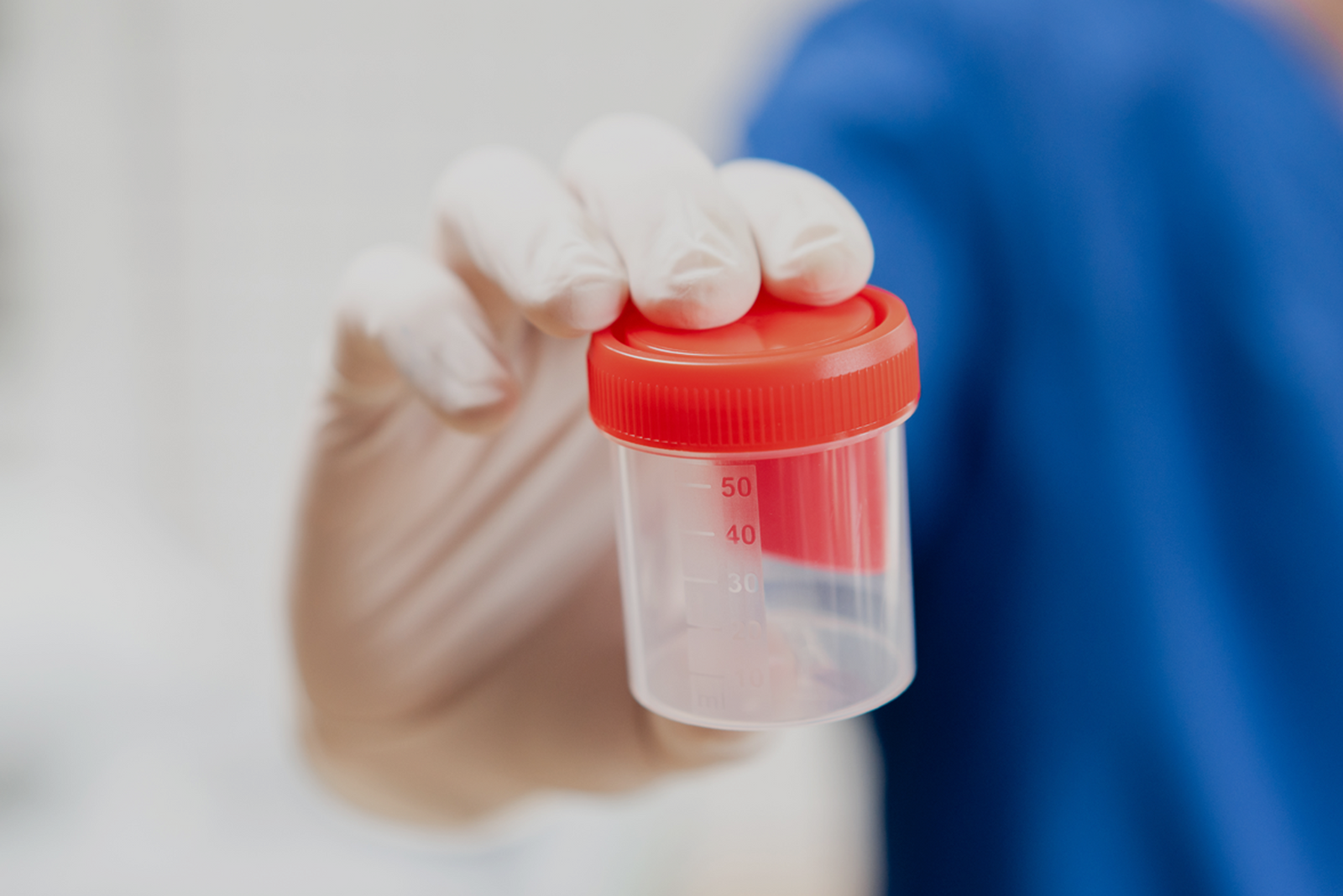
No. The drug test is the urine specimen you provide at a testing facility. CG-719P is the paperwork that documents the result.
The MRO fills it out after reviewing your lab results. You don’t complete the medical sections yourself.
We recommend bringing it. Some testing facilities use CG-719P, while others provide an acceptable MRO letter or Federal Chain of Custody form. Confirm what documentation you will receive before the test.
The test results documented on CG-719P are valid for 185 days from the date of collection, per 46 CFR 16.220. After that, the NMC won’t accept them and you’ll need to test again.
Yes. You can download the current version of the DOT/USCG Periodic Drug Testing Form directly from the Mariners Learning System website or from the NMC’s forms page at dco.uscg.mil. Always use the latest version.
Drug tests for captain’s licenses typically cost $75 to $150, depending on the facility and location. This is a self-paid expense, separate from your Coast Guard application fees.
No. The NMC won’t accept drug testing letters from a union attesting to participation in a random testing program. The letter must come from a marine employer or a valid consortium.
Upload the completed PDF under the drug testing requirement in the Application Requirements checklist for your Merchant Mariner Credential (CG-719B) application. Do not upload it to the separate Medical Certificate application.
CG-719P is a short form with a big job: proving to the Coast Guard that you’re free of prohibited substances and fit to hold a federal credential. The form itself isn’t complicated. The difference between a smooth application and a delayed one usually comes down to choosing the right facility, getting the MRO signature, and timing the test to your application.
If you have questions about CG-719P or any other part of the application process, the team at Mariners Learning System is here to help. We’ve guided more than 200,000 students through this process, and we’re not going to let paperwork be the reason you don’t get your license.
Coast Guard forms and submission procedures change. This guide reflects current USCG guidance as of September 2026. Always download the latest CG-719P and confirm current requirements with the NMC before submitting your application.
Ask a question, share an experience, or add a helpful tip related to this article. Comments may appear after review to prevent spam.
Unlock 24/7 access to Navi, an AI instructor trained on MLS course material, so you can ask questions, run practice quizzes, and nail your captain’s exam.


Learn what questions to ask and how to prepare for a captain’s license drug test to ensure you avoid the most common application delays.

Discover the three types of drug tests working captains must submit to even after they’ve met the initial USCG drug testing requirements for their license.

Discover how a retired airline pilot became obsessed with the Great Loop and built a thriving captain training business through Mariners Learning System.

Learn which substances the MMC drug test looks for, plus how masking agents and false positives factor in.


Discover the five most common mistakes mariners make on the captain’s license physical, plus a checklist for how to avoid them.
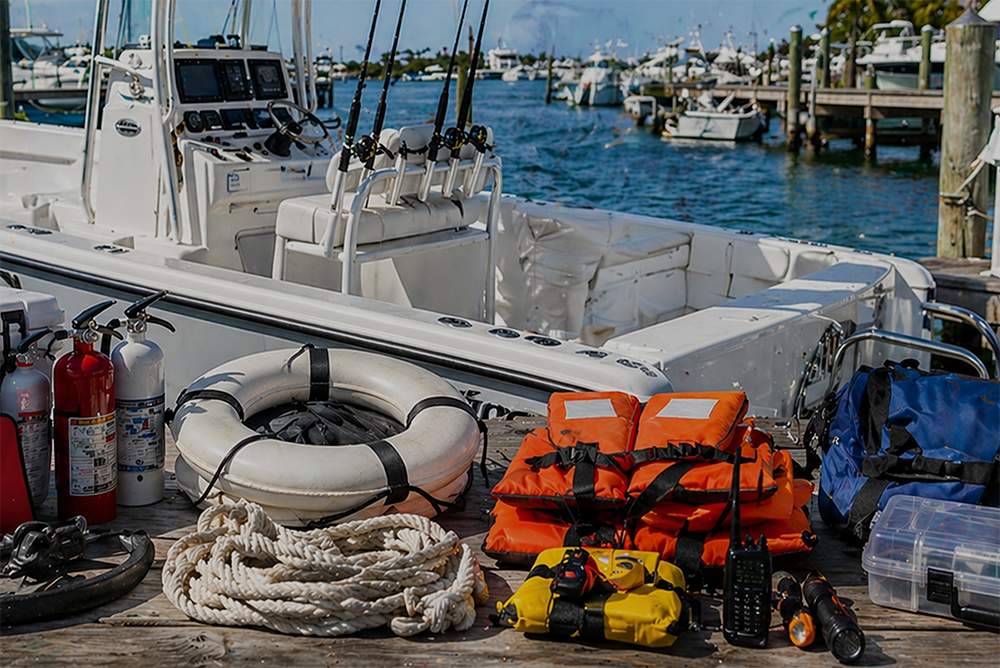

Discover why so many charter captains run out of money and how to plan every startup cost from your vessel purchase to guest-ready outfitting.

Learn how to build a charter business plan that covers pricing, expenses, and marketing so your captain’s license leads to lasting profit.

Transform how you talk about price with proven anchoring strategies and value-first framing that stops charter guests from shopping around.

Discover how charter captains use hybrid pricing models and seasonal adjustments to increase revenue and simplify bookings for every guest type.