

Meet Navi: Your 24/7 AI Instructor Inside the MLS Classroom
Unlock 24/7 access to Navi, an AI instructor trained on MLS course material, so you can ask questions, run practice quizzes, and nail your captain’s exam.

When boaters think about launching a charter business, their thoughts usually turn to getting an OUPV license, preparing their vessel, and finding customers.
What many don’t realize — until it’s too late — is that the Jones Act’s rules could prevent you from using your own boat for commercial purposes if that vessel was built outside the U.S.
Getting tripped up here can turn your dream charter business into a bureaucratic nightmare. I learned this lesson the hard way, and I want to help others avoid the same expensive, frustrating mistake.
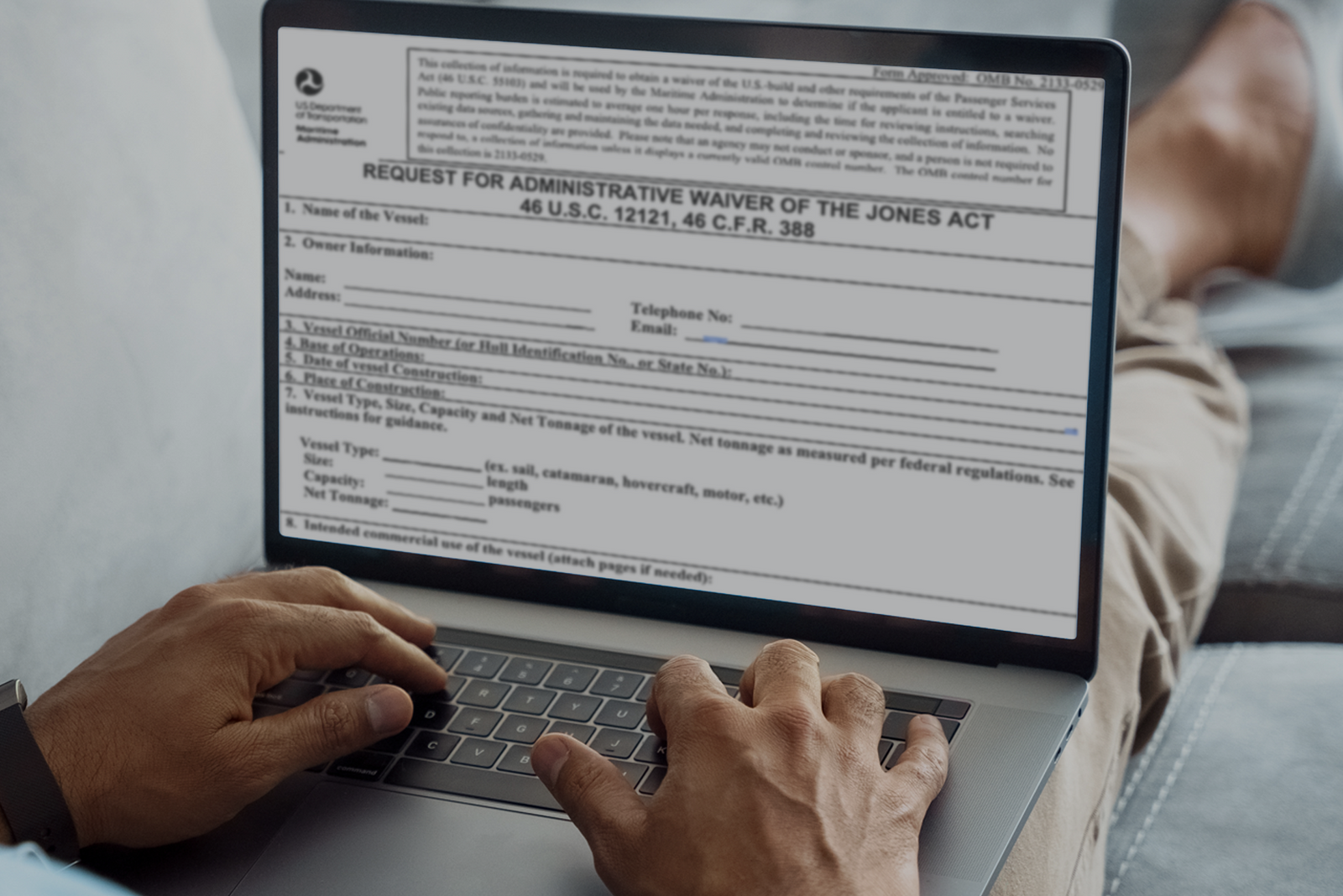
Let’s walk through what you need to know about the rules of the Jones Act and, for those who need it, what’s involved in a Jones Act waiver.

At its core, the Jones Act — part of U.S. maritime law since 1920 — protects American shipbuilding and shipowners by restricting commercial operations to U.S.-built vessels.
Under the Jones Act’s rules, a vessel used in passenger carriage or cargo trade between U.S. ports (coastwise trade) must have its keel laid in an American shipyard.
That means if you build a shiny new boat overseas with big plans for running charters back at home, you’ll hit a hard stop when you try to register your vessel for commercial use.
Under the rules of the Jones Act, to be eligible for coastwise trade, a vessel must meet all of the following:
If your vessel doesn’t meet these criteria, you can’t legally use it for paid charters or any commercial work without a special exception that qualifies you for a Jones Act waiver.
Years ago, I returned from sailing around the world with a gorgeous French-built catamaran I’d commissioned through a U.S.-based company. I had big plans for that boat: running charters, helping others enjoy sailing, and turning my hard-won experience into a business.
I had the knowledge. I had the credentials. I had the boat.
What I didn’t have was permission.
The dealer who sold me the boat didn’t mention the Jones Act’s rules, so I was blindsided when I applied to change the vessel’s documentation from recreational to commercial. Since the keel had been laid in France, I wasn’t allowed to use my catamaran for U.S. charters under the Jones Act.
The good news is that a legal path forward exists, though it’s not a guarantee. You can apply for a Jones Act waiver, sometimes referred to as a MARAD waiver, through the U.S. Maritime Administration. Applying involves a ton of paperwork, and you may be denied, but the attempt is worthwhile if you already have a vessel you want to use commercially.
Here’s a snapshot of what I had to do to get a Jones Act waiver:
In my case, three boats in the country applied for a Jones Act waiver at the same time: mine on the East Coast and two others on the West Coast. Mine was the only application that received zero objections, and it was the only one granted the waiver.
One plus of Jones Act waivers — if you can get them — is that they stay with the vessel, which can be a huge benefit.
When I sold my catamaran years later, it was the only Catana 431 in the U.S. legally allowed to operate as a charter boat. Its Jones Act waiver added serious value to the sale. The buyer didn’t just get a great boat; they got a beautiful, French-built catamaran legally cleared for U.S. charters under the Jones Act’s rules.
After my own frustrating experience — and others I’ve seen along the way — here are my recommendations for avoiding running afoul of the Jones Act:
If you’re thinking about running charters or otherwise using your vessel commercially, the Jones Act’s rules aren’t just fine print; they determine whether or not your business is legal.
Even with an OUPV license, you’ll be barred from operating your boat if it wasn’t built in the U.S. With patience, paperwork, and a bit of luck, it’s possible to get a Jones Act waiver, but it’s not something to count on.
Don’t let the Jones Act catch you off guard. Do your homework early to make sure your boat — and your business — have smooth sailing ahead.

Ask a question, share an experience, or add a helpful tip related to this article. Comments may appear after review to prevent spam.
Unlock 24/7 access to Navi, an AI instructor trained on MLS course material, so you can ask questions, run practice quizzes, and nail your captain’s exam.


Learn what questions to ask and how to prepare for a captain’s license drug test to ensure you avoid the most common application delays.
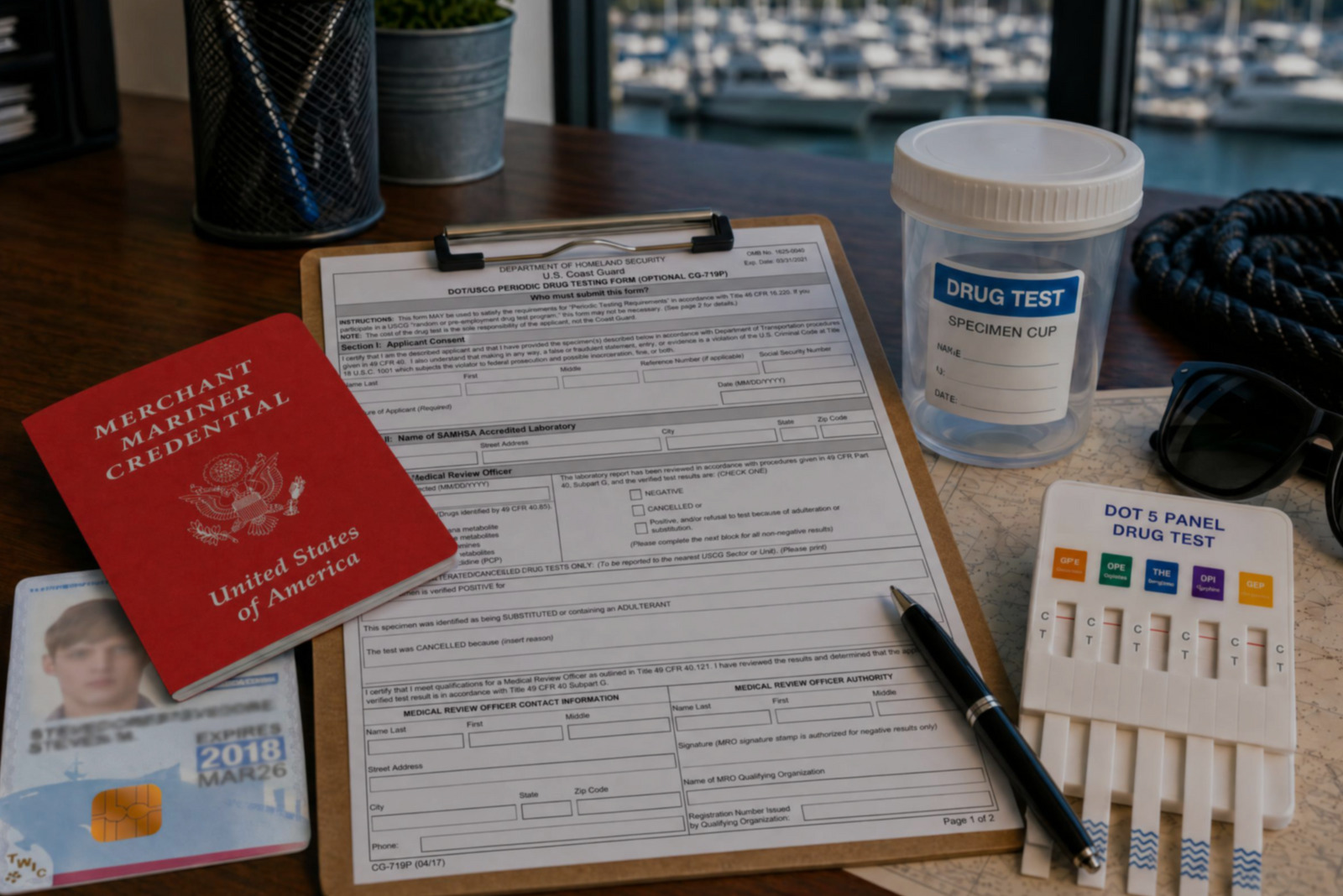

Discover the three types of drug tests working captains must submit to even after they’ve met the initial USCG drug testing requirements for their license.

Discover how a retired airline pilot became obsessed with the Great Loop and built a thriving captain training business through Mariners Learning System.


Learn which substances the MMC drug test looks for, plus how masking agents and false positives factor in.


Discover the five most common mistakes mariners make on the captain’s license physical, plus a checklist for how to avoid them.
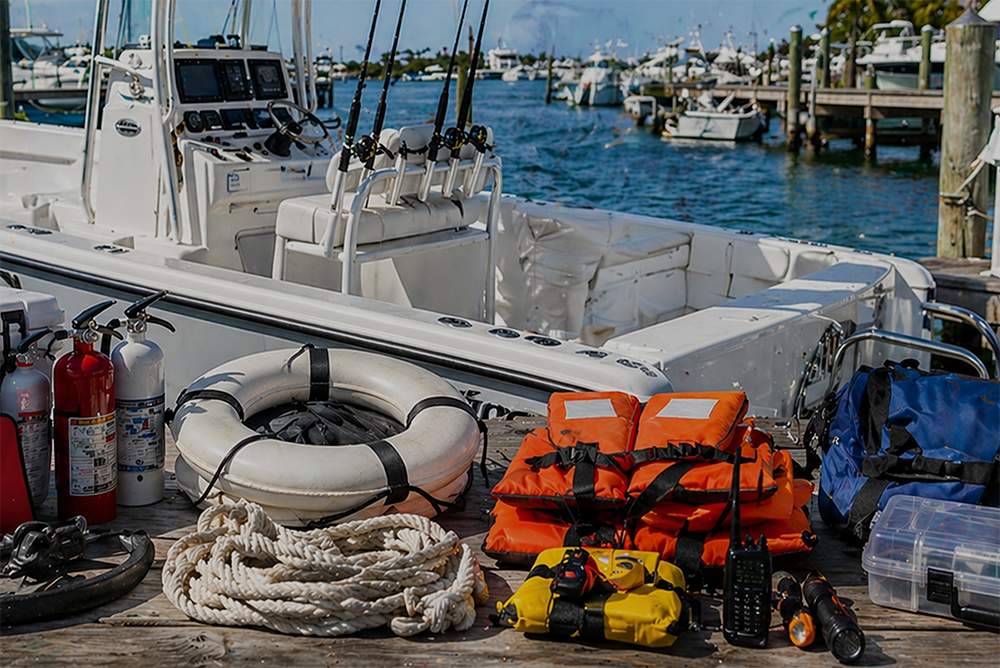

Discover why so many charter captains run out of money and how to plan every startup cost from your vessel purchase to guest-ready outfitting.

Learn how to build a charter business plan that covers pricing, expenses, and marketing so your captain’s license leads to lasting profit.

Transform how you talk about price with proven anchoring strategies and value-first framing that stops charter guests from shopping around.


Discover how charter captains use hybrid pricing models and seasonal adjustments to increase revenue and simplify bookings for every guest type.