

Meet Navi: Your 24/7 AI Instructor Inside the MLS Classroom
Unlock 24/7 access to Navi, an AI instructor trained on MLS course material, so you can ask questions, run practice quizzes, and nail your captain’s exam.

Just recently, one of my students called with an interesting question. They said the USCG captain’s license drug test was “the hardest test they had to study for” and wanted to know how long they needed to prepare.
I had to chuckle. But this isn’t the kind of test you “study” for. It’s the kind of test you should know the results of before you ever walk into a testing facility.
When you earn your captain’s license, you’re taking on more than a title — you’re accepting responsibility for the safety of your vessel and everyone on board.
That responsibility comes with certain federal requirements, including passing a USCG captain’s license drug test and staying enrolled in a USCG random drug testing program. Failing to meet these requirements can result in fines, suspensions, and the loss of your license — even if you never operate under the influence.
With that in mind, here’s what every aspiring or licensed captain needs to know to stay compliant and avoid trouble.

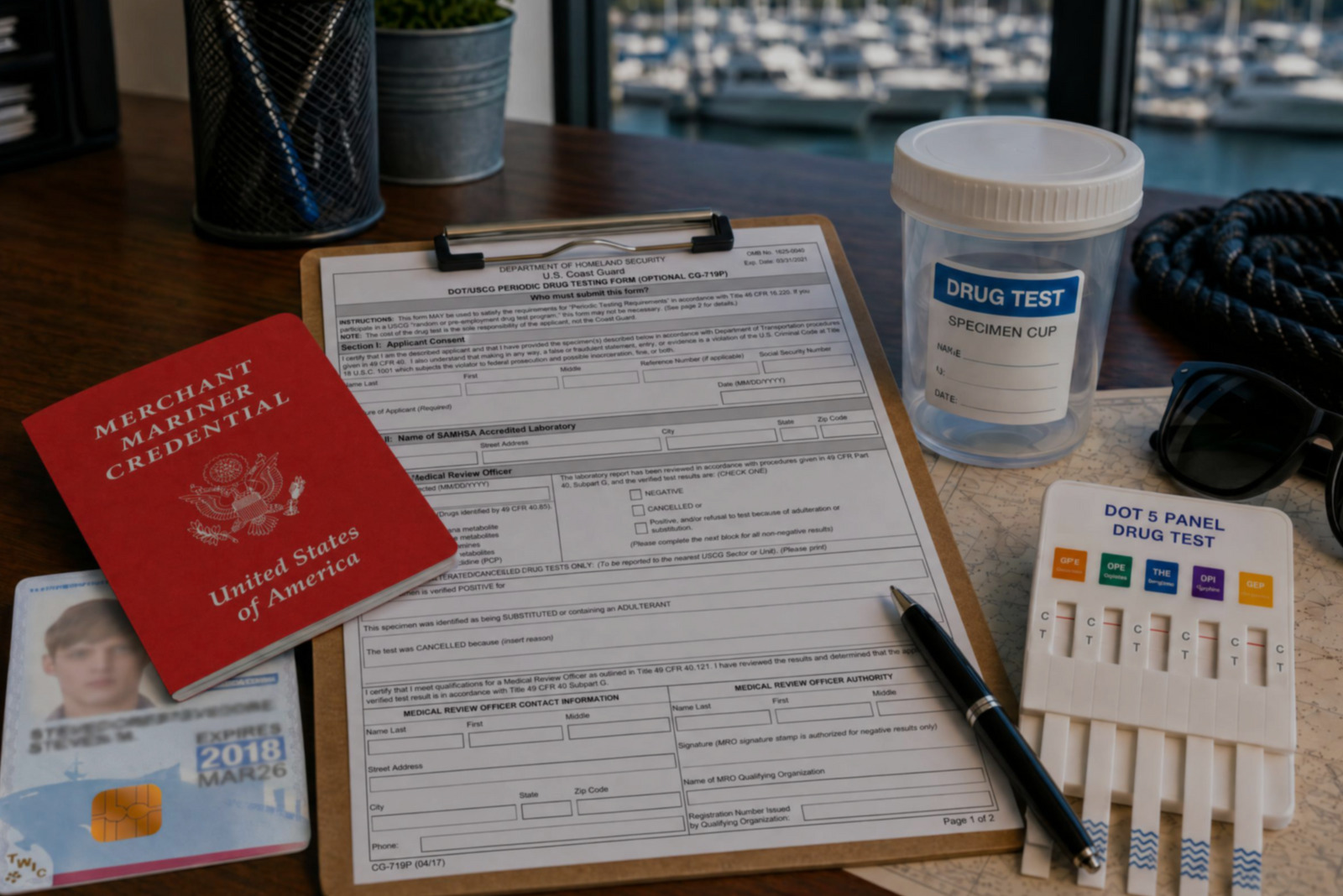
Before you apply for your captain’s license, you need to pass a USCG captain’s license drug test. You’ll visit an approved testing facility with the proper Coast Guard form (CG-719P, which we provide for our students), give your urine sample, and have them complete the documentation.
With this self-paid drug test, the results aren’t sent directly to the Coast Guard. Instead, the facility returns the form back to you, and you’ll include it with your application packet.
Here’s where many people trip up: Not all drug testing facilities are approved by the Coast Guard. So, when you call a lab, be sure to specifically ask if they offer the DOT 5-panel drug test for captain’s licenses, and that it’s accepted by the Coast Guard. If the location isn’t Coast Guard-approved, you’ll just have to repeat the whole process again at another facility.
The test looks for five substances: marijuana, cocaine, amphetamines, opiates, and phencyclidine (PCP). Even if you live in a state where marijuana is legal recreationally or medically, remember that your captain’s license is a federal credential. Since marijuana remains illegal at a federal level, testing positive for it will disqualify you.
I’ve had people tell me, “I only took one gummy.” That one gummy was one too many.
Again, this is one test where you should absolutely know the outcome before you take it. Don’t gamble with your maritime career by assuming you’ll pass if you’ve used marijuana recently.
The results of your initial USCG captain’s license drug test remain valid for six months. At Mariners, we recommend that students wait until the end of their coursework to take the drug test so they have ample time to complete their application and any other outstanding requirements.
Once you have your captain’s license and plan to use it professionally, you must enroll in a USCG random drug testing program, also called a consortium. This requirement extends to crew members as well, who must also be enrolled in a random testing program.
USCG random drug testing programs typically cost between $40 and $80 per year. Your name goes into a pool, and depending on the program’s schedule, names are drawn regularly for testing. If your name is called, you have 72 hours to report for testing.
I’ve been in a random drug testing program for over 20 years and have never been called. (Because I said that, I’ll probably get called tomorrow!) But that’s the nature of random testing: It’s unpredictable, and you always have to be ready.
If your name is called, the 72-hour clock starts ticking. If you’re traveling for business, out on a boat, or have some other documented reason why you can’t immediately comply, a small window may be extended to you. However, if you fail to take the test within the required timeframe without a valid excuse, it’s considered a failure.
A failed test or refusal to test can result in license suspension or revocation, crippling your commercial maritime endeavors.
When you’re applying for your USCG captain’s license, the Coast Guard requires you to disclose any past drug-related convictions, DWIs, and DUIs. And when the Coast Guard asks these questions, it’s best to assume they already know the answers.
A past conviction may or may not affect your license approval, but lying about a past conviction definitely will.
If you got busted for smoking pot at age 18, for instance, and you disclose it honestly on your application at age 60, it likely won’t interfere with your licensing. But hiding it becomes a trust issue — something the Coast Guard takes seriously.
Remember, the Coast Guard isn’t looking to punish youthful folly here. They’re looking for patterns of behavior that could pose a safety threat to passengers if you become a licensed captain.
For this reason, a DUI from 20 years ago might not be a problem in the Coast Guard’s eyes, but a recent DUI, or three DUIs over 20 years, will likely create challenges. In these latter cases, voluntarily entering counseling or treatment programs and documenting your efforts may help your application.
Assume the Coast Guard can see every incident from your past, even if your records were sealed or expunged, or you completed some court-ordered program. Expungement doesn’t mean a conviction disappears, just that it won’t follow you around in civilian life.
Again, the bottom line here is to be honest. Disclose all charges, giving the details to the best of your ability, and let the Coast Guard follow up with questions if they need to.
The USCG captain’s license drug test and ongoing random testing requirements might seem burdensome, but they serve an important purpose. They ensure licensed mariners are fit for duty and capable of making sound decisions while responsible for passengers’ safety.
If you’re considering a captain’s license, factor these requirements into your decision. If you currently hold a license, make sure you’re enrolled in a USCG random drug testing program and prepared to comply with testing requirements at any time.
USCG drug testing isn’t about judgment. It’s about safety and responsibility in a federally regulated industry.
So, stay clean, stay honest, and stay compliant. Your maritime career depends on it.

Ask a question, share an experience, or add a helpful tip related to this article. Comments may appear after review to prevent spam.
Unlock 24/7 access to Navi, an AI instructor trained on MLS course material, so you can ask questions, run practice quizzes, and nail your captain’s exam.


Learn what questions to ask and how to prepare for a captain’s license drug test to ensure you avoid the most common application delays.

Discover the three types of drug tests working captains must submit to even after they’ve met the initial USCG drug testing requirements for their license.

Discover how a retired airline pilot became obsessed with the Great Loop and built a thriving captain training business through Mariners Learning System.
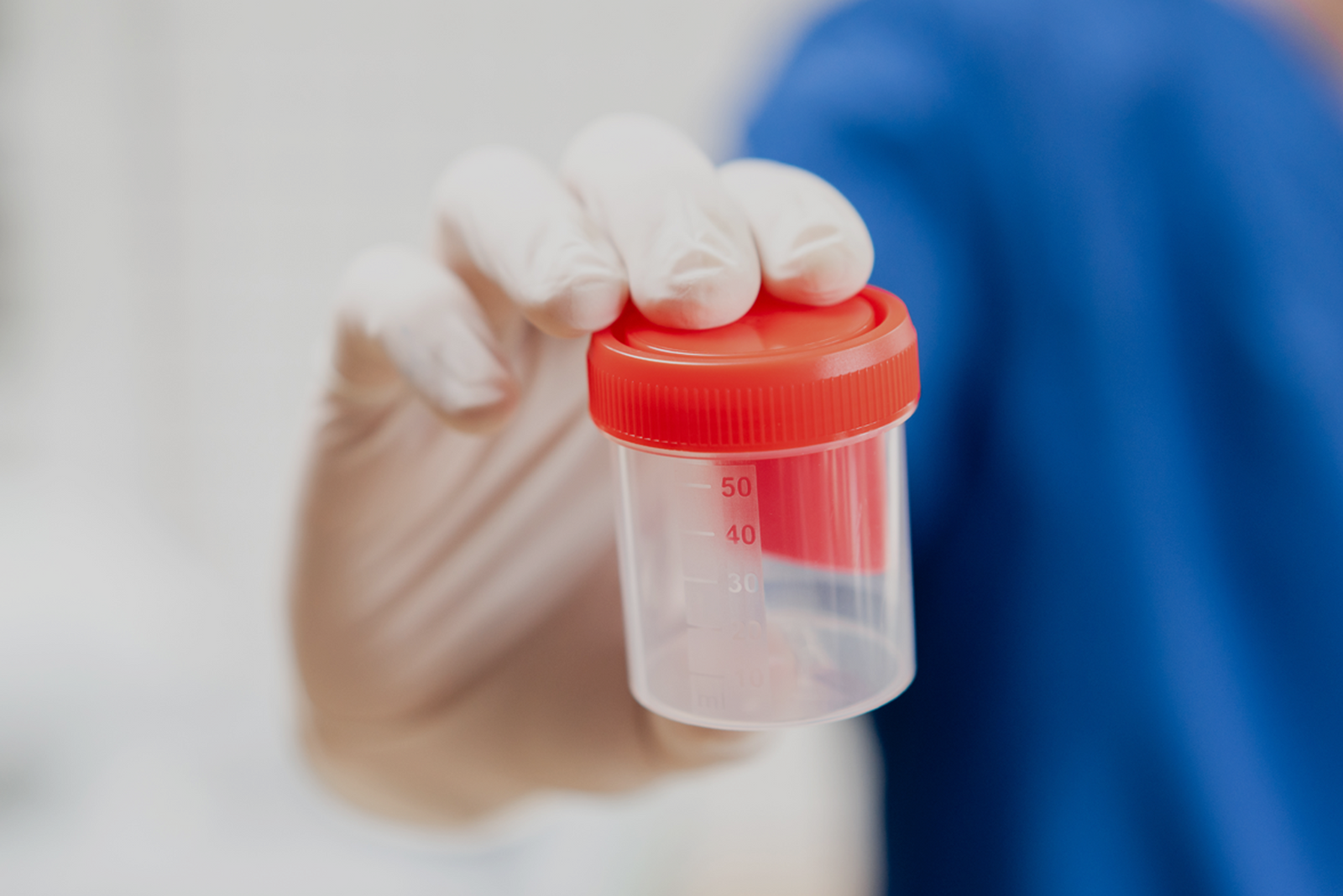

Learn which substances the MMC drug test looks for, plus how masking agents and false positives factor in.


Discover the five most common mistakes mariners make on the captain’s license physical, plus a checklist for how to avoid them.

Discover why so many charter captains run out of money and how to plan every startup cost from your vessel purchase to guest-ready outfitting.

Learn how to build a charter business plan that covers pricing, expenses, and marketing so your captain’s license leads to lasting profit.


Transform how you talk about price with proven anchoring strategies and value-first framing that stops charter guests from shopping around.

Discover how charter captains use hybrid pricing models and seasonal adjustments to increase revenue and simplify bookings for every guest type.