
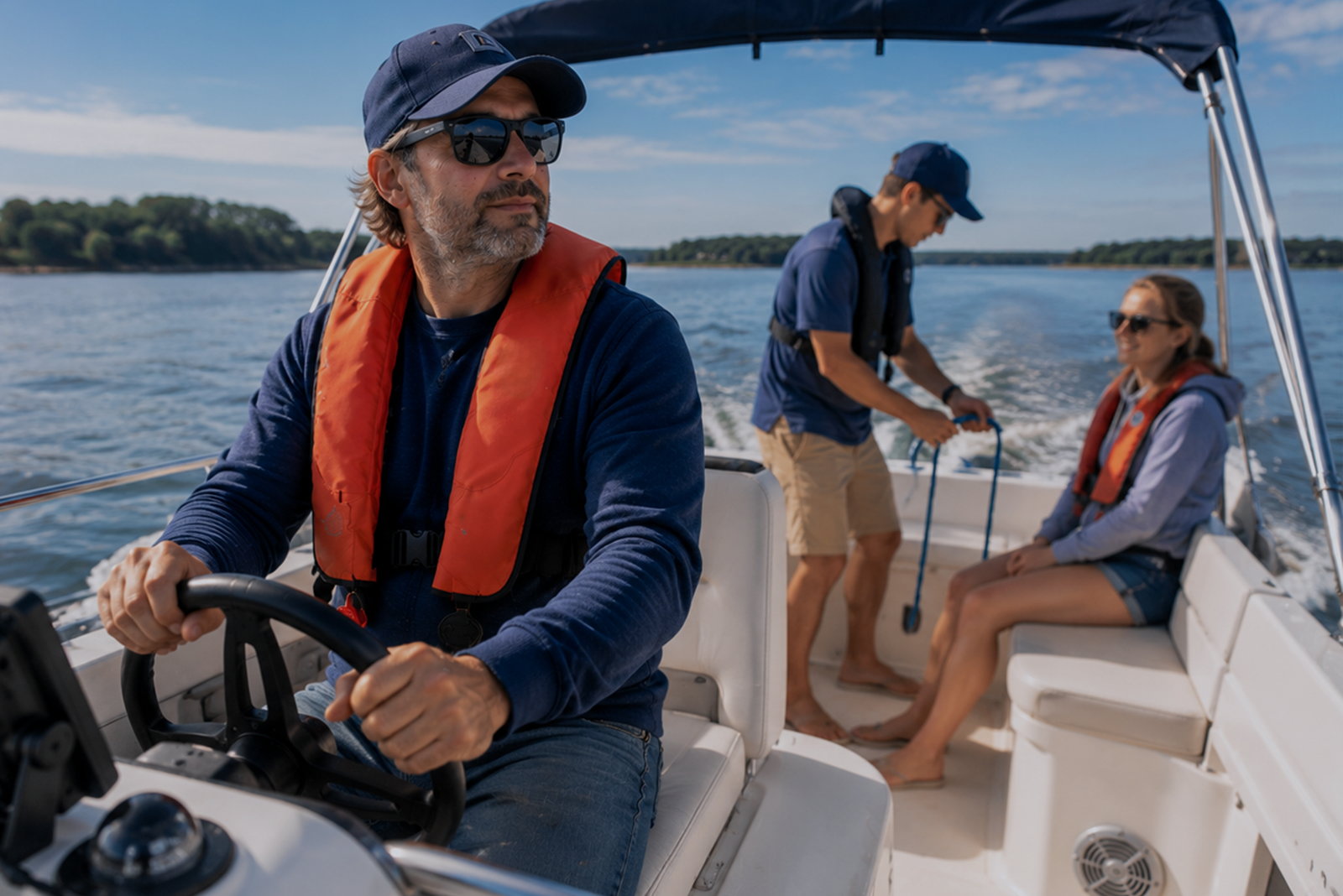

Crew, Skipper, and Master Skipper Roles Explained
Crew, Skipper, and Master Skipper describe three levels of responsibility on a recreational boat. At Mariners Learning System, they’re also a skill-building course ladder, not U.S. Coast Guard (USCG) licenses. You need a Coast Guard captain’s license only when you carry paying passengers.
Every safe day on the water runs on clear roles. Someone handles the lines, someone runs the boat, and on bigger trips, someone oversees the whole operation. When those roles blur, simple outings get risky fast.
Whether you’re stepping aboard for the first time or moving toward command, knowing the difference between crew, skipper, and master skipper keeps everyone safer. Here’s what each role does and where a recreational certification ends and a Coast Guard license begins.

Crew, Skipper, or Master Skipper: What’s the Difference?
The three roles describe a ladder of responsibility, from supporting the boat to commanding it. A crew member assists. A skipper runs the vessel and the people aboard. A master skipper handles larger, more complex boats and often leads other skippers. Here’s how they compare at a glance.

These are a good next step after you’ve met your state’s safe boating requirements. They are recreational skill certifications, not government licenses. They prove you’ve trained for the role, which matters for confidence, safety, and many boat-club or charter-membership requirements.
Is a master skipper the same as a captain?
Not exactly. “Master Skipper” is a recreational skill level, while “captain” usually implies a Coast Guard credential when paying passengers are aboard. A master skipper commands a private vessel with advanced training, but carrying customers for hire still requires a USCG captain’s license.
What Does a Crew Member Do?
The crew is the backbone of any vessel, handling the hands-on tasks that keep a boat running smoothly and safely. Crew members usually work under the direction of the skipper or master skipper, and the role is the natural starting point for anyone new to boating. The job builds the habits every higher role depends on.
A crew member typically handles:
- Assisting with docking and mooring
- Performing maintenance, such as cleaning and equipment checks
- Operating under the supervision of the skipper or master skipper
- Keeping passengers safe by following instructions during emergencies
New boaters fill most crew roles, and they’re vital to safe operations. Strong crew habits, line handling, situational awareness, and clear communication carry straight into the skipper’s seat later.
Do I need experience to join a boat as crew?
No. Crew is the entry point, and most people start with little or no boating background. A short course like Mariners Crew gives you the safety fundamentals and vocabulary so you contribute from day one instead of getting in the way.
What Does a Skipper Do?
The skipper runs the boat and everyone on it. This is the leadership role most recreational boaters grow into, covering navigation, crew management, weather calls, legal compliance, and safety. A skipper needs real competence in boat handling and decision-making because the people aboard rely on those calls.
A skipper is responsible for:
- Setting the course: planning the route, adjusting heading, and keeping safe passage
- Managing the crew: delegating tasks by skill and keeping operations efficient
- Monitoring weather: tracking conditions and changing the plan when they shift
- Ensuring compliance: following maritime rules, safety protocols, and required certifications
- Overseeing safety: protecting passengers and crew, including running emergency procedures
A capable skipper keeps the boat operating smoothly and everyone aboard safe. That blend of seamanship and leadership is exactly what the Mariners Skipper course builds.
What’s the difference between a skipper and a crew member?
A crew member executes tasks; a skipper makes the decisions behind them. Crew handle lines and maintenance under direction, while the skipper plans the route, reads the weather, and holds final responsibility for the boat and the people on board.
What Does a Master Skipper Do?
A master skipper holds the highest recreational skill level, usually commanding larger or more complex vessels. The role covers advanced navigation, oversight of crew and other skippers, vessel compliance, and emergency response under demanding conditions. It reflects years of hands-on experience plus training that goes beyond what a regular skipper needs.
A master skipper typically handles:
- Operating larger vessels: boats with multiple decks, advanced systems, or specialized gear
- Supervising crew and skippers: leading and training a team, coordinating roles
- Advanced navigation: piloting difficult waters, adverse weather, or complex routes
- Ensuring compliance: meeting maritime laws, safety standards, and documentation
- Managing risk: spotting hazards and running advanced emergency responses
Master skippers earn that standing through experience and certification that exceeds the skipper level. At Mariners, you build it through the Master Skipper of Power and Sail course, or the power-only and sail-only paths.
Can a master skipper command any boat?
Not for hire. A master skipper certification proves advanced recreational skill, but commanding a vessel that carries paying passengers requires a Coast Guard captain’s license. For private boating, the certification documents the command-level training you’ve completed.
Skipper vs. Captain: Are They the Same Thing?
People use “skipper” and “captain” interchangeably, but the words carry different weight. A skipper is the person in charge of a vessel, a term rooted in recreational boating. A captain, in the legal sense, usually holds a Coast Guard credential and bears formal responsibility for the vessel, crew, and passengers under maritime law.
The practical line is money. Run your own boat with friends and family aboard, and “skipper” fits. Carry passengers for hire, meaning you charge people to come aboard, and the law treats you as a captain who needs a USCG license.
So a recreational master skipper and a licensed captain can both command a boat with skill. Only one of them is cleared to charge passengers for the trip.
Is a skipper a captain?
In casual use, yes; both lead a boat. Legally, “captain” implies a licensed credential when carrying paying passengers, while “skipper” describes the person in charge of a recreational vessel. The title you need depends on whether money changes hands.
Do You Need a License for Any of These Roles?
For recreational boating with friends and family, no federal captain’s license is required for any of these roles. Crew, Skipper, and Master Skipper are skill certifications that build competence and confidence, not government permits. The moment you carry paying passengers, the rules change and a Coast Guard license becomes mandatory.
Two licenses cover most newly licensed captains. The OUPV/Six-Pack Captain’s License, short for Operator of Uninspected Passenger Vessels, lets you carry up to six paying passengers. The 25/50/100-Ton Master Captain’s License raises that passenger limit, covers larger vessels, and is the highest license many recreational boaters pursue.
Do I need a license to be a skipper on my own boat?
No. Operating your own recreational boat without paying passengers needs no federal captain’s license, though your state may require a boater-education card. A USCG license becomes mandatory only when you carry passengers for hire.
How to Move From Crew to Master Skipper
The path from deckhand to command follows the same ladder the roles describe. You build core skills as crew, add navigation and leadership as a skipper, then layer on advanced seamanship as a master skipper. Each Mariners course carries the earlier fundamentals forward, so nothing repeats and nothing gets skipped.
- Start with Mariners Crew to learn seafaring fundamentals, safety, and teamwork.
- Advance to Mariners Skipper for navigation, meteorology, piloting, and leadership.
- Reach Master Skipper of Power, Sail, or both for survival skills, vessel recovery, and advanced communications.
Browse the full ladder on the Mariners Recreation page, and pair any course with the matching guides in the recreational study guide collection.
Frequently Asked Questions About Crew, Skipper, and Master Skipper Roles
Are Mariners Crew, Skipper, and Master Skipper courses USCG licenses?
No. They’re recreational skill certifications that train and document your competence on the water. They’re separate from Coast Guard captain’s licensing, which you need only when carrying paying passengers for hire.
Which course is right for a beginner?
Mariners Crew is the entry point for new boaters. It covers maritime basics, safety, and teamwork, then feeds directly into the Skipper program once you’re ready to take the helm and lead a trip.
What’s the difference between Master Skipper of Power and of Sail?
Power covers motor-vessel handling and navigation; Sail covers wind-powered seamanship. The Power and Sail course combines both for boaters who run motor and sailing vessels and want command-level skill across each.
When does a skipper legally become a captain?
When passengers pay to be aboard. Carrying paying passengers for hire requires a Coast Guard captain’s license, regardless of how experienced a recreational skipper you are. Private trips with friends and family don’t trigger that requirement.
Sources
- U.S. Coast Guard National Maritime Center, captain’s license and credential requirements (NMC)
- 46 CFR Subchapter B, officer endorsement requirements for vessels carrying passengers for hire (eCFR)
- BoatUS Foundation, recreational boating education resources
Conclusion
Crew, Skipper, and Master Skipper aren’t ranks you’re handed. They’re skill levels you earn, and each one makes the next day on the water safer and more confident. Knowing where you sit on that ladder tells you exactly what to learn next.
If your goal is private boating, build the skills and enjoy the water. If you plan to carry paying passengers, your next move is a Coast Guard license.
To learn more about safe marine operation of all kinds, find a course that’s right for you with Mariners Learning System. From recreational boating to commercial charters, we detail everything you need to know to keep you, your boat, and your passengers safe on the water.
by Bob Figular, Founder & President | Mariners Learning System
Captain Robert “Bob” Figular is the founder of Mariners Learning System, an innovative online education provider for aspiring boat captains. A former United States Navy Petty Officer turned world sailor, Captain Bob’s multi-year voyages around the world inspired him to revolutionize maritime education. In 2002, he established Mariners Learning System, which became the first U.S. Coast Guard-approved online course provider for captain’s licenses. With a USCG Master’s License and a passion for accessible, comprehensive boating education, Bob continues to lead Mariners Learning System in equipping students with essential knowledge and skills for safe, confident operation and navigation.
Leave a Comment
Comments will be approved before showing up.