

Meet Navi: Your 24/7 AI Instructor Inside the MLS Classroom
Unlock 24/7 access to Navi, an AI instructor trained on MLS course material, so you can ask questions, run practice quizzes, and nail your captain’s exam.
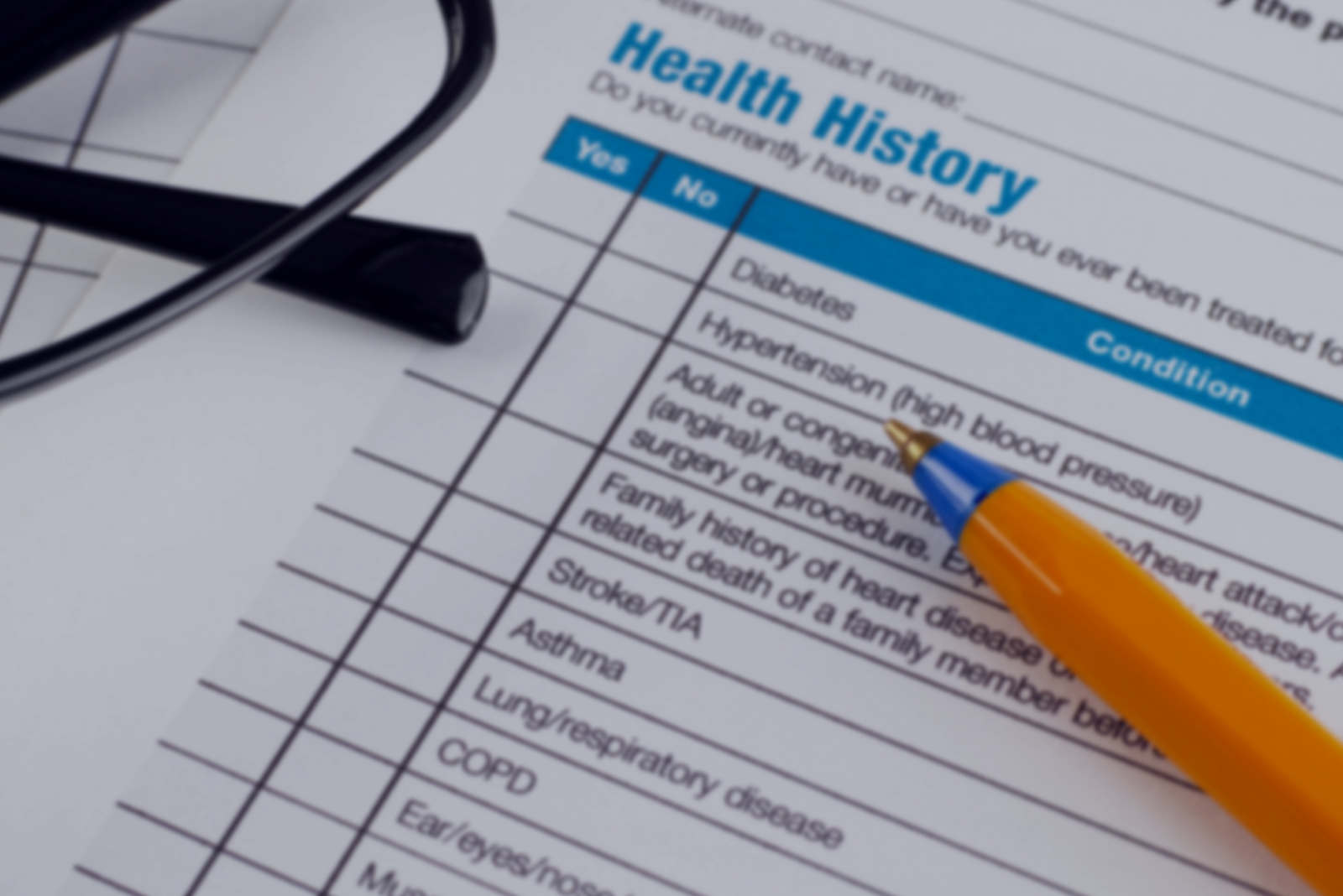

Almost no health condition automatically bars you from a U.S. Coast Guard captain’s license. The Coast Guard reviews your medical fitness one applicant at a time, using the exam recorded on Form CG-719K. Common conditions like sleep apnea, heart disease, and diabetes usually clear once your doctor documents them.
Found your condition on a list of captain’s license medical disqualifiers? Take a breath. Most conditions that look like dealbreakers turn out to be manageable once your doctor puts them in writing.
The Coast Guard cares about one thing: whether you can run a boat and handle an emergency safely. A diagnosis rarely ends your shot at a license. It usually just adds a form to your application.

Coast Guard medical processes change. This guide explains current USCG guidance in plain terms, but your situation is unique. For a determination on your condition, contact the NMC Medical Helpdesk at 1-888-427-5662.
We are here to provide guidance, but the National Maritime Center is the ultimate issuing authority. Contact them for specific guidance.
A medical disqualifier is any condition that, left undocumented, can stop the National Maritime Center from issuing your medical certificate. The National Maritime Center (NMC) is the Coast Guard office that reviews every mariner’s health file. Its medical standards sit in a federal regulation, 46 CFR 10.302, and they ask one question: Can you perform routine and emergency duties at sea safely?
The Coast Guard groups its concerns into vision, hearing, general medical conditions, and physical ability. Most “disqualifiers” you read about online are conditions that need documentation, not automatic denials. The difference between a delay and a denial is almost always paperwork.
No. Any cause for rejection applies only while the condition persists or stays likely to cause complications. If your condition is treated, stable, and documented, the same diagnosis that delayed one applicant can clear review for you.

Five conditions account for most medical holds on captain’s license applications. None of them is an automatic disqualifier on its own. Each one delays a file when the applicant shows up without supporting documentation, and each one tends to clear when a treating provider confirms the condition is stable and managed. Here’s the short list and what the NMC wants to see.
|
Condition |
Why the NMC Flags It |
What Usually Clears It |
|
Cardiac disease |
Risk of a sudden event while on watch |
Cardiologist letter confirming stability, often 18 months event-free |
|
Diabetes |
Risk of hypoglycemia or complications at sea |
Recent A1C and a provider note on control and complications |
|
Psychiatric disorders |
Effect of symptoms or medication on judgment |
Treating provider statement on stability and medication effects |
|
Sleep apnea |
Daytime fatigue affecting alertness |
Treatment-compliance records, sometimes a sleep study |
|
Chronic narcotics use |
Impairment and federal drug-testing rules |
Documentation of the prescription and a passing drug test |
The pattern holds for all five: document the condition, show it’s controlled, and the NMC can clear it. Chronic narcotic use also triggers a separate rule, the DOT 5-panel (a federal five-substance drug screen), which must fall within 185 days of your application under 46 CFR 16.220.
Vision problems and incomplete documentation drive a large share of “awaiting information” holds, according to NMC data on medical certificate processing. Most are avoidable. A complete CG-719K with the right attachments prevents the back-and-forth that adds weeks to a file.
The NMC runs every CG-719K through a three-step medical review, though most applicants never pass the first step. Reviewers escalate a file only when a condition falls outside the previous reviewer’s authority. Understanding the ladder tells you why a clean, well-documented form moves fast and a vague one stalls.
When evaluators need more, they issue an “awaiting information” request rather than a denial. That’s your chance to supply the missing letter, test result, or compliance record before any decision is made.
It means the NMC needs more from you before finishing the evaluation. A medical exam often flags a treatment, injury, or medication that needs clarification. Responding quickly with the requested document is the fastest way to keep your file moving.
Plenty of conditions that sound disqualifying are routinely approved with documentation. The Coast Guard built waivers and limitations into the system precisely because a fixed list can’t capture every real-world case. These are the conditions we field the most questions about, and how each one tends to go.
Sleep apnea. No longer an automatic disqualifier. You’ll need a letter confirming the condition is controlled, proof of treatment compliance such as CPAP usage reports, and sometimes a recent sleep study for moderate to severe cases.
Heart conditions. Usually manageable when you’ve been free of heart-related events for more than 18 months and your cardiologist documents that the condition is stable. Each case differs, so the NMC may ask for more detail.
Color vision. Not an automatic bar. An applicant who sees only in black and white can still earn a license, sometimes with a restriction limiting professional use to daylight hours. The Farnsworth Lantern Test (FALANT) is a recognized way to assess maritime color vision.
Diabetes. Type 1 or type 2 can qualify when well controlled. The Coast Guard typically looks for an A1C (a measure of your average blood sugar) under 8 and no serious complications, such as insulin shock, in the past 18 months.
Blood pressure and medications. The Coast Guard typically looks for blood pressure under 150/90. If you take prescription medication, you can still qualify; call the NMC to confirm how a specific drug affects your application.
Yes, as long as it’s well controlled and managed. Provide a doctor’s letter confirming control, proof of treatment compliance, and a recent sleep study if your case is moderate to severe. Meet those, and approval is likely.
Usually, yes. Color blindness rarely bars a license outright, though it can add a daylight-only restriction for professional use. The Farnsworth Lantern Test is a good way to document your color vision for the Coast Guard.
When a condition falls short of the standard but doesn’t pose a real safety risk, the NMC can issue a waiver under 46 CFR 10.303. A waiver often carries a limitation, such as a daylight-only limit or a restriction to certain waters, and it puts an obligation on you. You carry the waiver letter whenever you operate under your credential.
A waiver acknowledges that the Coast Guard knows about your condition and expects you to report any change. Conditions that worsen can affect your fitness for certification later. Skip the reporting or ignore the limitations, and the NMC can void the waiver.
Yes. The NMC grants waivers for documented conditions that don’t pose a significant risk to maritime safety. Read the waiver letter closely, follow any limitations it names, and report changes in your condition to keep it valid.
A little preparation turns a stressful exam into a formality. Your physical exam goes on Form CG-719K, the Application for Medical Certificate, and most of our students complete it with their family doctor. Bring your documentation to the appointment instead of scrambling for it after the NMC asks.
Walk in prepared, and most conditions that worry applicants come down to one attached letter: proof your condition is known, treated, and stable.
You must be physically fit to perform routine and emergency duties at sea, with adequate vision, hearing, and general health under 46 CFR 10.302. A licensed practitioner documents your fitness on Form CG-719K. No medical history is expected to be perfect.
The medical certificate is the Coast Guard’s proof that you meet the medical and physical standards for a Merchant Mariner Credential (MMC), the official credential behind your captain’s license. It confirms you can handle basic safety duties, communicate and hear alarms, and serve at sea without a condition or medication that impairs you.
Often, yes, when your diabetes is well controlled. The Coast Guard typically looks for an A1C under 8 and no serious complications in the past 18 months. Confirm your specific situation with the NMC.
The Coast Guard typically looks for blood pressure under 150/90. If yours runs higher, a provider note on treatment and control helps your case during review.
Submit the completed CG-719K to the National Maritime Center with your credential application. For condition-specific questions, the NMC Medical Helpdesk can tell you what documentation your case needs before you apply.
A diagnosis on the disqualifier list isn’t a verdict. It’s a documentation task. The mariners who stall treat the CG-719K as a hurdle. The ones who pass treat it as their chance to show the Coast Guard they’re safe on the water.
Get your provider letters in order, confirm your conditions are stable, and submit a complete form. From here, your next move is the license itself.
Ready to start? The OUPV/Six-Pack Captain’s License lets you carry up to six paying passengers, and the 25/50/100-Ton Master Captain’s License covers larger and inspected vessels. We wrote the exam ourselves and include it in the course price, with no surprise fees, and we’ve guided more than 200,000 students through the process. We’re not going to let a medical form be the reason you don’t earn your license.
Ask a question, share an experience, or add a helpful tip related to this article. Comments may appear after review to prevent spam.
Unlock 24/7 access to Navi, an AI instructor trained on MLS course material, so you can ask questions, run practice quizzes, and nail your captain’s exam.


Learn what questions to ask and how to prepare for a captain’s license drug test to ensure you avoid the most common application delays.
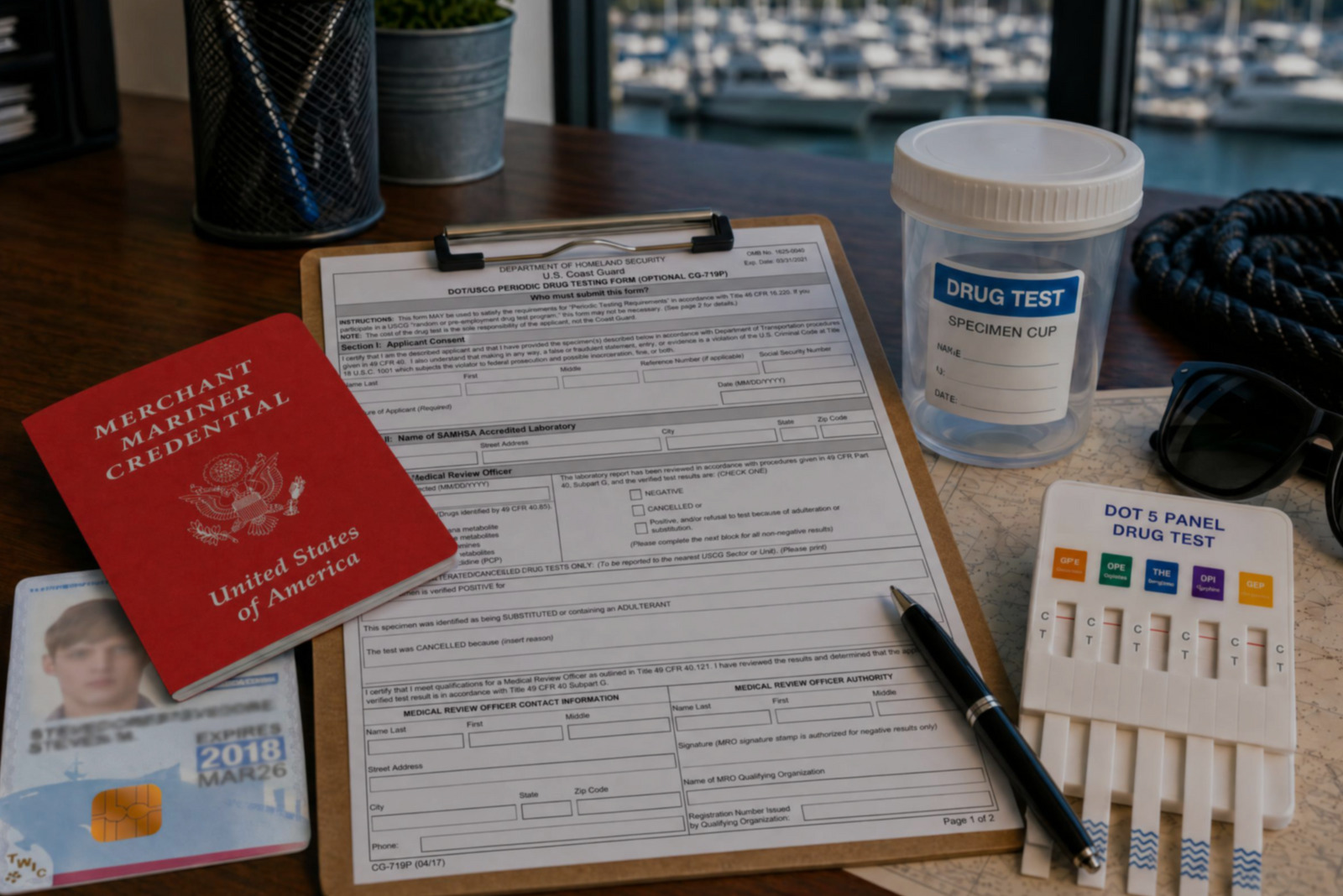

Discover the three types of drug tests working captains must submit to even after they’ve met the initial USCG drug testing requirements for their license.
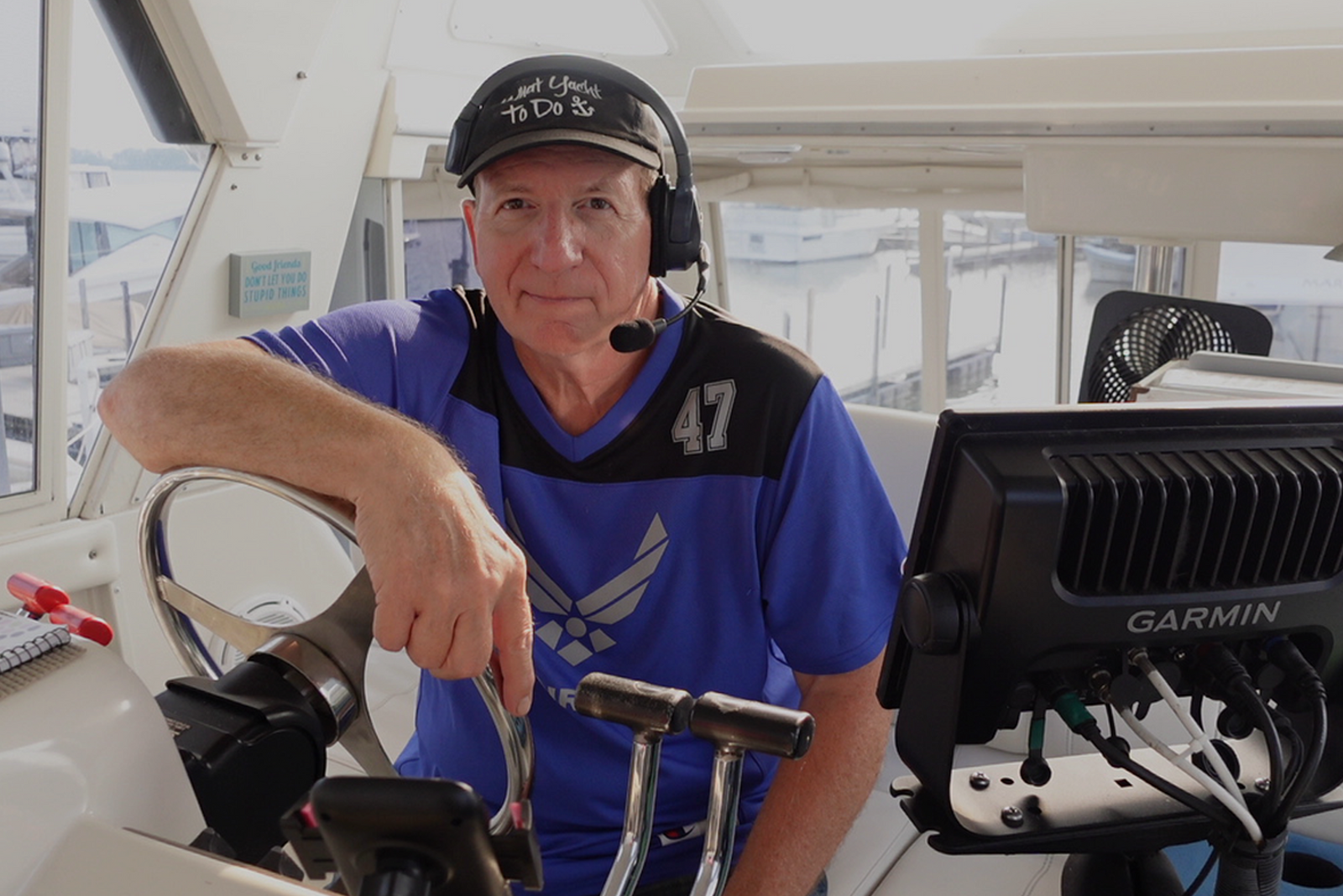

Discover how a retired airline pilot became obsessed with the Great Loop and built a thriving captain training business through Mariners Learning System.


Learn which substances the MMC drug test looks for, plus how masking agents and false positives factor in.


Discover the five most common mistakes mariners make on the captain’s license physical, plus a checklist for how to avoid them.
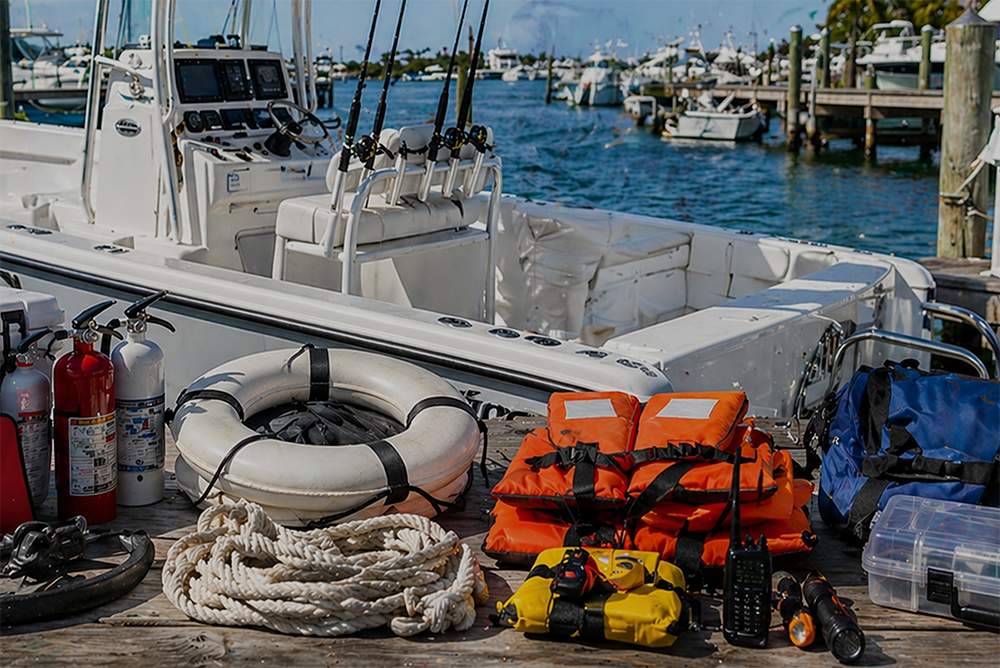

Discover why so many charter captains run out of money and how to plan every startup cost from your vessel purchase to guest-ready outfitting.
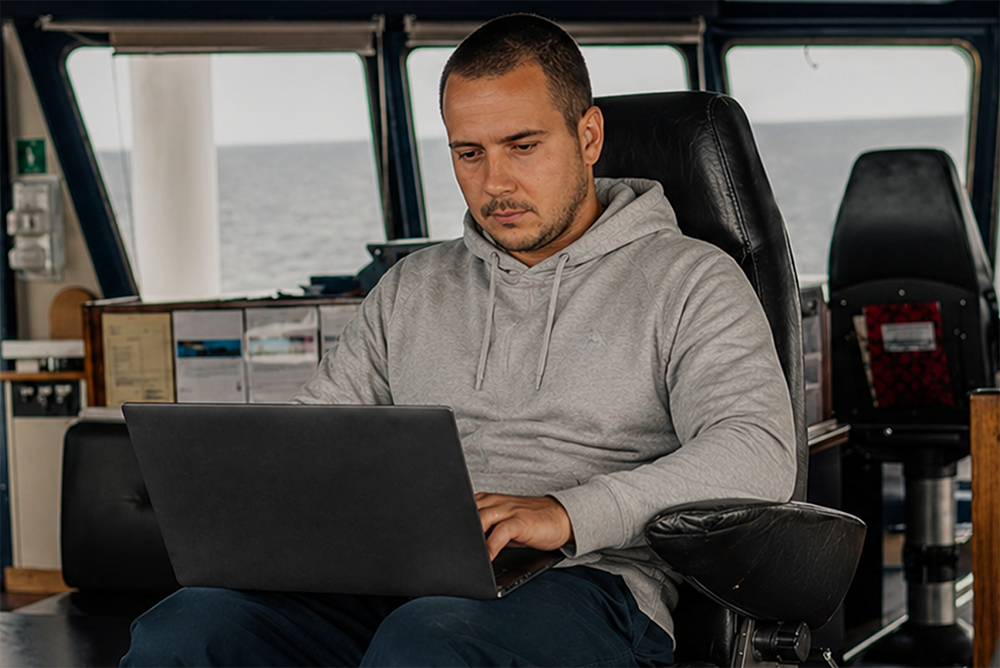

Learn how to build a charter business plan that covers pricing, expenses, and marketing so your captain’s license leads to lasting profit.
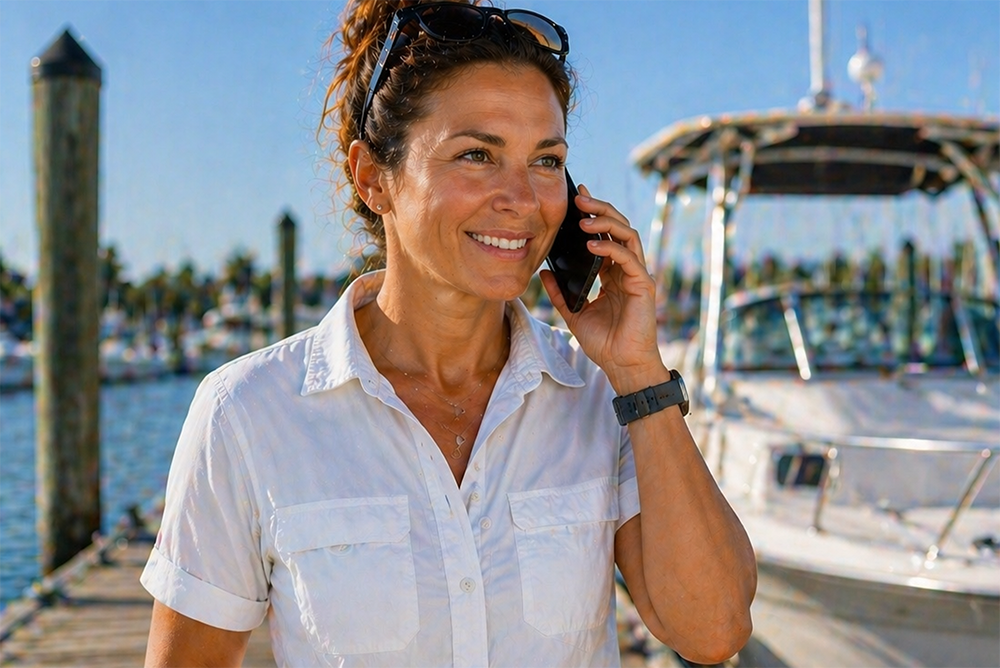

Transform how you talk about price with proven anchoring strategies and value-first framing that stops charter guests from shopping around.


Discover how charter captains use hybrid pricing models and seasonal adjustments to increase revenue and simplify bookings for every guest type.