

Meet Navi: Your 24/7 AI Instructor Inside the MLS Classroom
Unlock 24/7 access to Navi, an AI instructor trained on MLS course material, so you can ask questions, run practice quizzes, and nail your captain’s exam.
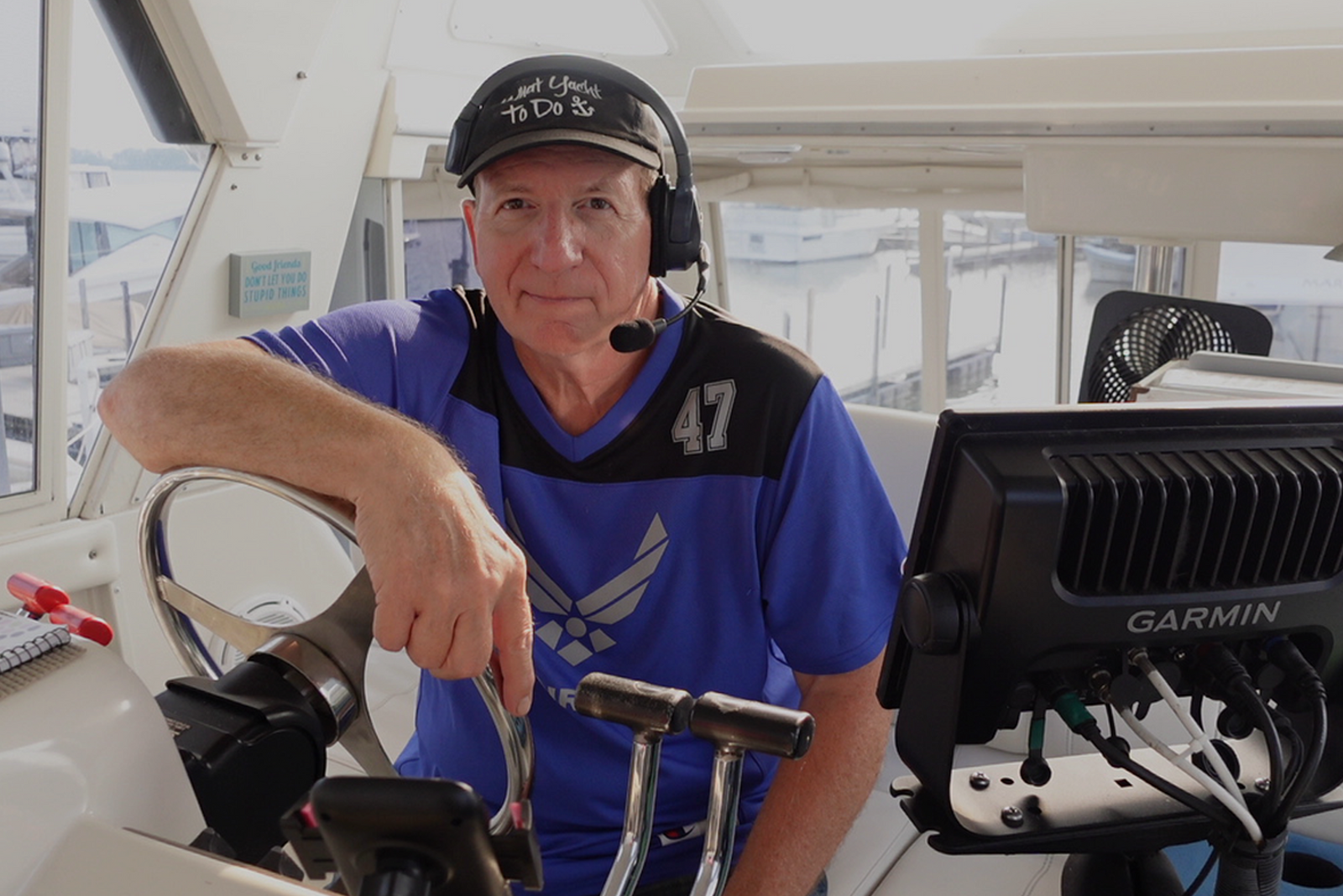

Sam Crouse spent 40 years in aviation. He flew 40 types of aircraft, qualified to instruct in about 30 of them, and retired from the airlines with a career most pilots would envy.
Then he bought a boat, learned about America’s Great Loop, and got obsessed.
That obsession turned into more than two trips around the 6,000-mile route, a YouTube channel with 272 videos, an online education business, and a second career as a USCG 100 Ton Master Captain. Today, Sam works as a training captain, teaches new boat owners how to handle their vessels, and co-leads What Yacht To Do with his wife, Rev.

Sam’s professional life started in the U.S. Air Force. He trained as a navigator, earned a slot in pilot school, flew the B-52G and U-2R, served as both a primary and advanced jet instructor, and held three director staff positions before leaving the military.
From there, he moved into commercial aviation. Over the course of his airline career, Sam flew the Boeing 747, 737, DC-9, Fokker 100, and the Airbus A320 family.
He founded Crouse Training and Consulting Inc. in 2004, serving private and government organizations. He holds a master’s degree from Embry-Riddle Aeronautical University and a doctorate from the University of Texas at Dallas.
Through it all, boating was a constant. Sam had been on the water since his teens and owned three boats over the years. The crossover between aviation and boating felt natural to him: both rely on navigation, safety protocols, weather decision-making, and the instructional skills needed to teach others.
“I learned how to navigate pre-GPS,” Sam says. “In aviation, I even did celestial navigation.”
Sam’s professional turning point came when he learned about America’s Great Loop, a roughly 6,000-mile boating route that circles the eastern United States and part of Canada. He became fixated on it.
Sam and Rev sold their house, bought a 50-foot Carver, and set off on a liveaboard adventure. They’ve since completed the loop more than twice and taken their boating to Scotland, the Netherlands, and Italy.
“The Great Loop tests your navigation skills in just about every type of water except blue ocean,” Sam says. “It wrings you out.”
When Sam first told Rev about the idea, her response surprised him.
“She said, ‘I’m starting a YouTube channel,’” Sam recalls. “I said, ‘I don’t want anything to do with YouTube.’ She said, ‘I’m doing it anyway.’”
Rev named the channel What Yacht To Do, originally to keep friends and family updated on their location and safety. Sam predicted nobody would watch it. He was wrong.
The channel attracted boaters interested in completing the Great Loop. That audience led Sam to create Great Loop Academy, an online platform offering courses, coaching, and planning resources for boaters considering the loop. Once Sam earned his captain’s license, they added training and delivery services to the business.
With decades of sea time and a lifetime of navigation experience, Sam was qualified to pursue a captain’s license. What he needed was a program that fit his schedule.
“Mariners Learning System was really the only choice at that time,” Sam says. “I looked at the reviews, and it seemed to fit my schedule. One thing I loved about it was that you could take the exam at home. That saves a lot of time, money, and hassle.”
Sam took the OUPV (Six-Pack) and Master’s courses back to back. The sequential approach helped with retention: he completed all the coursework, then sat for both exams in succession.
The licensing process itself involved more than coursework. Sam needed a physical exam, a drug test, a Transportation Worker’s Identity Card, an FCC license, first aid and CPR certification through the Red Cross, and a Coast Guard application fee. He got the physical done first to confirm he qualified before investing time in the rest of the process.
“It’s just like anything,” Sam says. “You have to carve out the time to do it, be diligent, and give yourself plenty of time.”
Every five years, captains must renew their credentials with the Coast Guard. When Sam calculated his sea time for the renewal, he came up 33 days short. He contacted Captain Bob Figular at MLS, who pointed him toward the deck renewal course.
“The deck renewal course was just as challenging as the first one, but they present the material nicely,” Sam says.
The renewal raised the bar. For the initial license, charting and Rules of the Road required a 90% passing score, with the Master’s course sections at 70%. For the renewal, all sections required 90%.
“It required a little bit more studying,” Sam says. “One of the more challenging areas is lighting and signals, things you don’t deal with on a normal basis as a training captain. You need to know that for both international and inland rules.”
Sam appreciated the study tools built into the course: practice quizzes, embedded videos for visual learners, and downloadable lecture notes and summaries he could print and review. The mobile app let him study during travel, a feature MLS hadn’t offered when he first took the course.
“Good job for Mariners, keeping up with technology,” he says.
Sam has spent his career on both sides of the classroom. He’s taught courses, built training programs, and evaluated curricula for government and private organizations. When he’s on the student side, he knows what he’s looking for.
“It really is a track record,” he says. “Reviews, what other people are saying. Mariners has this learning space locked up, from what I know.”
Sam was so impressed with the MLS format and process that he contacted Captain Bob and began working with the company in an educational capacity.
He does think maritime licensing could improve in a few areas, and he’s clear these aren’t MLS-specific criticisms. They apply to the entire industry.
The first area is electronic charting. Sam is glad the Coast Guard still emphasizes paper charts and tests on them. “Even though electronic charting is fairly intuitive, it’s nice to know what that machine is doing behind the scenes,” he says. “When you actually have to plot it on a chart, you understand the process.”
The second area is practical testing. “We have that in aviation,” Sam says. “Whenever you get a license, you go out and demonstrate your skills. It would be a huge undertaking for the Coast Guard, but it could be done.”
The third area is formal training for captains who want to teach others. “That’s a whole set of skills,” Sam says. “Adult learning principles could be added at some point.”
Sam uses his captain’s license primarily as a training captain, working with couples and new boat owners in the 40- to 60-foot range. He operates out of Oklahoma and Galveston, Texas, and flies to clients along the Great Loop and Intracoastal areas.
“I like interfacing with people, teaching people,” he says. “My airline buddies and my Air Force buddies have truly told me that I’ve failed at retirement, but I enjoy doing this. It keeps me sharp.”
Going forward, Sam and Rev plan to keep What Yacht To Do and Great Loop Academy focused on education and adventure. Sam expects to take on 10–12 training and delivery trips per year.
Viewers of the What Yacht To Do channel often ask Sam whether a captain’s license is necessary to complete the Great Loop. His answer: No, but it helps.
“If you have the experience and the sea time, it really makes you a safer and better boater,” Sam says.
For those considering the license as a career move, the math works out quickly. “On one trip, the first trip, you can pay off your license fee,” he says. “It’s a great way to make a very comfortable living.”

Sam Crouse’s path from cockpit to captain’s chair wasn’t linear. It wound through the Air Force, the airlines, a liveaboard adventure, a YouTube channel he initially didn’t want, and a training business he didn’t plan on.
His captain’s license made the second half of that story possible.
If you’re considering earning your own license, take a look at your options here.
Ask a question, share an experience, or add a helpful tip related to this article. Comments may appear after review to prevent spam.
Unlock 24/7 access to Navi, an AI instructor trained on MLS course material, so you can ask questions, run practice quizzes, and nail your captain’s exam.


Learn what questions to ask and how to prepare for a captain’s license drug test to ensure you avoid the most common application delays.
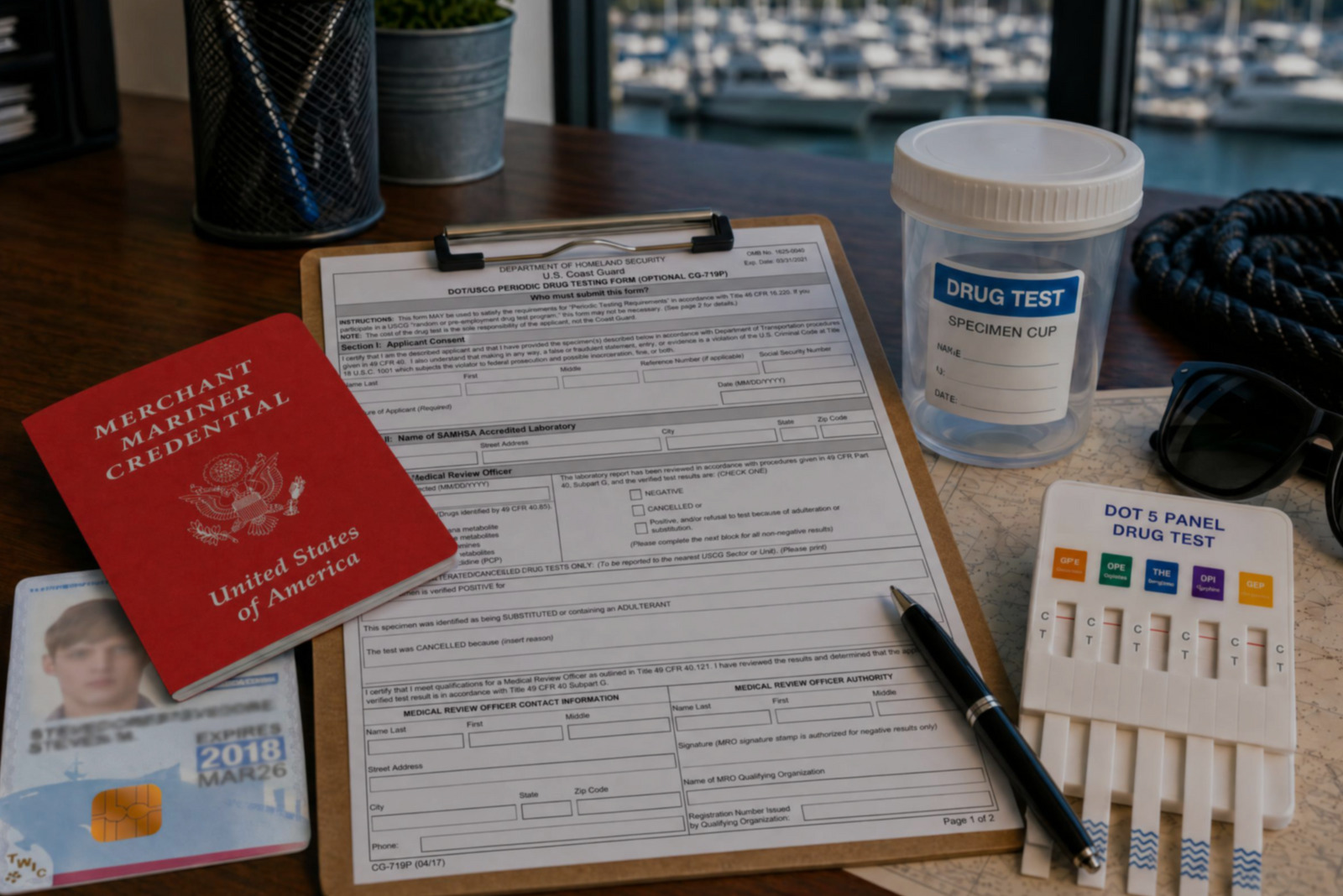

Discover the three types of drug tests working captains must submit to even after they’ve met the initial USCG drug testing requirements for their license.
Discover how a retired airline pilot became obsessed with the Great Loop and built a thriving captain training business through Mariners Learning System.


Learn which substances the MMC drug test looks for, plus how masking agents and false positives factor in.


Discover the five most common mistakes mariners make on the captain’s license physical, plus a checklist for how to avoid them.
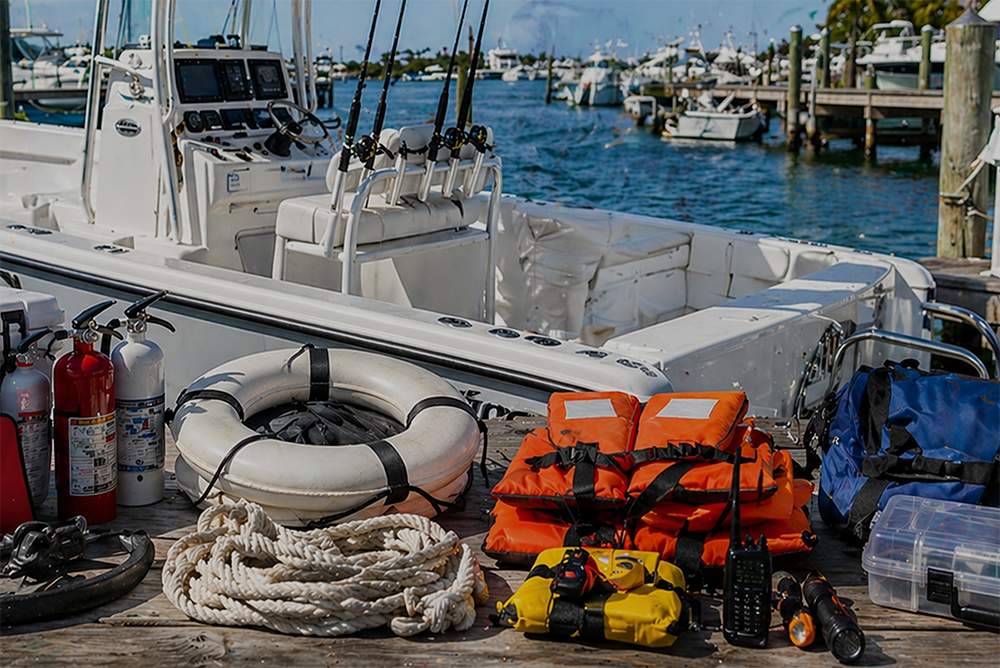

Discover why so many charter captains run out of money and how to plan every startup cost from your vessel purchase to guest-ready outfitting.

Learn how to build a charter business plan that covers pricing, expenses, and marketing so your captain’s license leads to lasting profit.

Transform how you talk about price with proven anchoring strategies and value-first framing that stops charter guests from shopping around.

Discover how charter captains use hybrid pricing models and seasonal adjustments to increase revenue and simplify bookings for every guest type.