

Meet Navi: Your 24/7 AI Instructor Inside the MLS Classroom
Unlock 24/7 access to Navi, an AI instructor trained on MLS course material, so you can ask questions, run practice quizzes, and nail your captain’s exam.
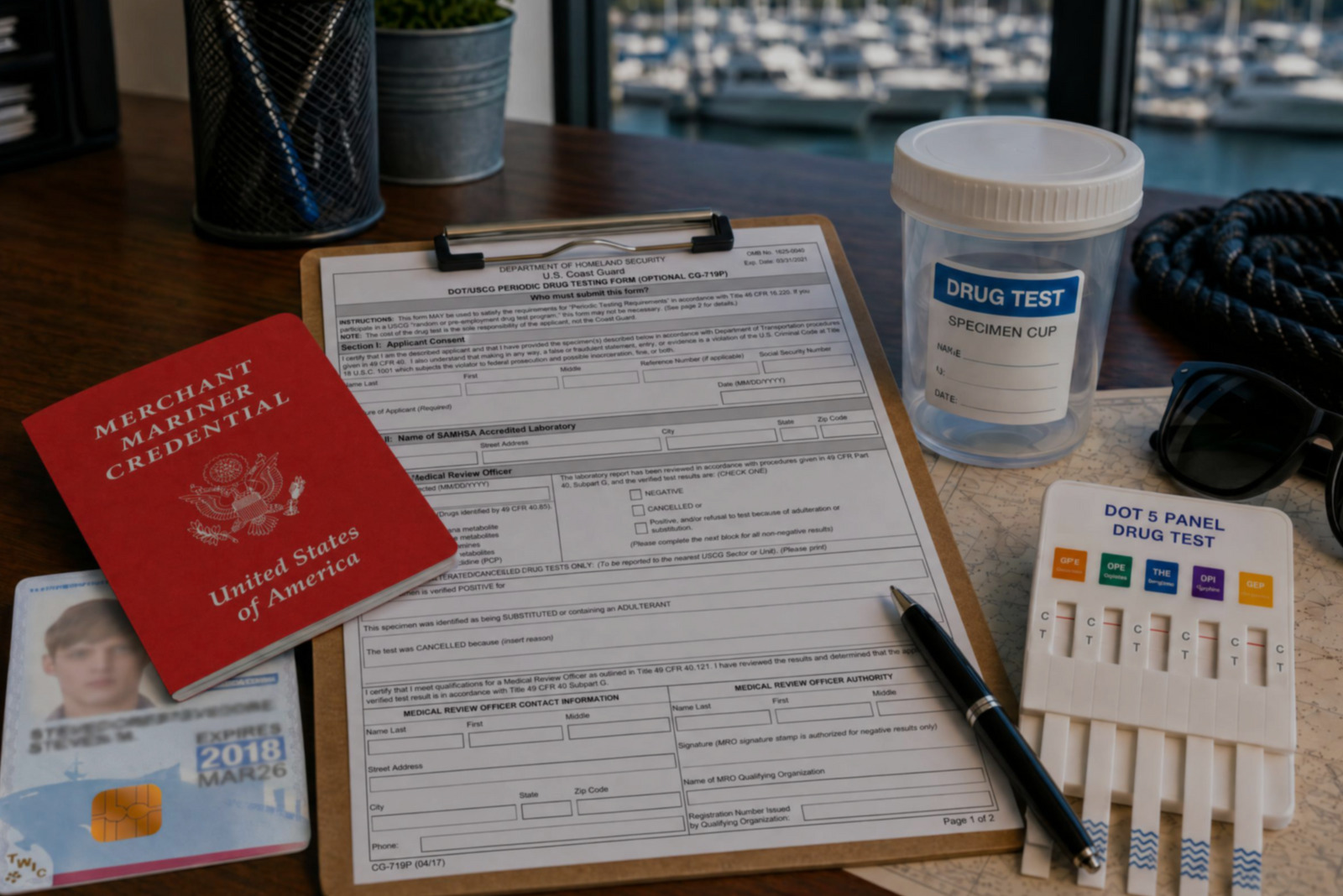

USCG drug testing requirements apply to all captain’s license applicants and commercially operating captains. Initial applicants must pass a DOT 5-panel urine test at a SAMHSA-certified lab, reviewed by a Medical Review Officer (MRO), within six months of their application date. Licensed captains operating commercially are also subject to random, post-accident, and reasonable suspicion testing.
Most aspiring captains know that earning a Merchant Mariner Credential requires passing a drug test. What surprises a lot of new licensees is what comes after.
If you plan to use your license professionally, the USCG drug testing requirements don’t stop with your captain’s license application. They follow you throughout your career.
Understanding what you’re signing up for before you start operating commercially is important, because the consequences of non-compliance are serious.
Here’s a breakdown of what you need to know.
Before diving into the ongoing requirements, let’s have a quick overview of the basic USCG drug testing requirements for first-time license applicants and renewal applicants.
Your first drug test is required as part of your original license application. Once your license is issued, you won’t need another standalone drug test until renewal, which comes every five years.
If you’re renewing and you’ve been enrolled in a qualifying random drug testing program throughout your license period, the Coast Guard will typically accept documentation of that enrollment in lieu of a new test. More on that program below.
If you’re not operating commercially and never have been, you’ll simply need to pass a new drug test at renewal, just as you did for your original application.
The particular test the USCG requires is the DOT 5-panel urine test. This test screens for marijuana, cocaine, amphetamines, opiates, and PCP. It must be collected at a SAMHSA-certified lab, reviewed and signed by a Medical Review Officer (MRO), and accompanied by a Chain of Custody form. Results are valid for six months from the date of collection.
If you fail the drug test, you’re required to wait one year before retesting. And if you’re thinking about using a masking agent to alter your results, don’t. The Coast Guard tests for those, too, and a detected masking agent is treated the same as a positive result.
For a more detailed breakdown of laboratory facility and personnel requirements, see our post titled What Does the MMC Drug Test Look For?.

Besides earning and renewing their Merchant Mariner Credential, working captains are subject to three types of additional drug testing.
This is where the USCG drug testing requirements expand significantly for those using their license professionally.
Once you begin operating commercially, you’re required to enroll in a random drug testing program, commonly called a consortium. This is non-negotiable.
The consortium maintains a pool of enrolled mariners. The Code of Federal Regulations dictates what percentage of that pool must be tested on a monthly, quarterly, or annual basis. Your name sits in that pool, and at any point, it can be drawn.
When you get called, you have 72 hours to report to a testing facility and provide a sample. There are very limited exceptions, such as being overseas, which may extend the timeframe slightly. But “I don’t feel well” or “it’s not a good time” won’t cut it.
Failure to appear within the required window is treated the same as a failed test. So is a refusal.
Consortiums typically cost between $65 and $150 per year, depending on the program and whether you sign up for multiple years. It’s a modest fee for a requirement that stays with you as long as you hold an active commercial operation.
One more thing: You need to carry proof of enrollment. When the Coast Guard boards your vessel, they may ask to see both your license and your drug testing card. If you can’t produce that card, they’ll assume you’re not enrolled, and the consequences follow from there. This particular USCG drug testing requirement applies to all crew members as well.
When you’re enrolled in a consortium, you never know when your name will come up. I’ve been in a random drug testing program for over 20 years, and I’ve been called once, right when I first got my license. After that, nothing. It really does come down to the luck of the draw. But the key is staying enrolled and staying ready.
If you’re involved in a serious marine incident while operating commercially, the USCG requires a drug test. Full stop.
The Coast Guard defines a Serious Marine Incident (SMI) as an event involving a death, injury requiring medical treatment beyond first aid, significant property damage, or the grounding of a vessel. If any of those apply to an incident you’re involved in, testing is mandatory.
The testing window for a post-accident drug test is 32 hours from the time of the incident, unless safety issues prevent that timeframe from being feasible. Miss that window and the opportunity is gone, but the obligation isn’t. You may incur significant financial penalties, a Coast Guard investigation, and further legal or licensing problems.
Thirty-two hours may sound like plenty of time, but that time slips by quickly. If something goes wrong on the water and you’re the licensed captain on board, get tested as soon as possible. Plan ahead and make sure you know how to reach your consortium or a certified testing facility quickly if the situation ever arises.
The third category of USCG drug testing requirements for licensed captains is reasonable suspicion testing.
If your employer, a supervisor, or a Coast Guard officer has a specific, observable reason to believe you may be impaired, they can require you to submit to a drug test immediately. This isn’t based on hearsay or a gut feeling. It requires documented, articulable observations like slurred speech, erratic behavior, the smell of alcohol or drugs, or an inability to perform basic duties.
The threshold for reasonable suspicion is real, but so is the authority behind it. If a Coast Guard officer boards your vessel and believes you’re impaired, you’re not in a position to argue. You have to test.
A refusal to submit to a reasonable suspicion test is treated the same as a positive result, and your license can be suspended or revoked.
The USCG drug testing requirements for commercial captains are more involved than many new licensees expect, but they’re not difficult to meet if you take them seriously from day one.
Enroll in a consortium when you start operating professionally. Keep your card with your license. Know how to reach a testing facility quickly. Stay clean.
Getting your captain’s license is the beginning of your compliance journey, not the end. The Coast Guard takes these requirements seriously because lives depend on the decisions you make on the water.
At Mariners Learning System, we make sure every student understands not just how to earn their license, but how to keep it. If you have questions about drug testing compliance or anything else in the licensing process, reach out to our team.

Ask a question, share an experience, or add a helpful tip related to this article. Comments may appear after review to prevent spam.
Unlock 24/7 access to Navi, an AI instructor trained on MLS course material, so you can ask questions, run practice quizzes, and nail your captain’s exam.


Learn what questions to ask and how to prepare for a captain’s license drug test to ensure you avoid the most common application delays.
Discover the three types of drug tests working captains must submit to even after they’ve met the initial USCG drug testing requirements for their license.

Discover how a retired airline pilot became obsessed with the Great Loop and built a thriving captain training business through Mariners Learning System.
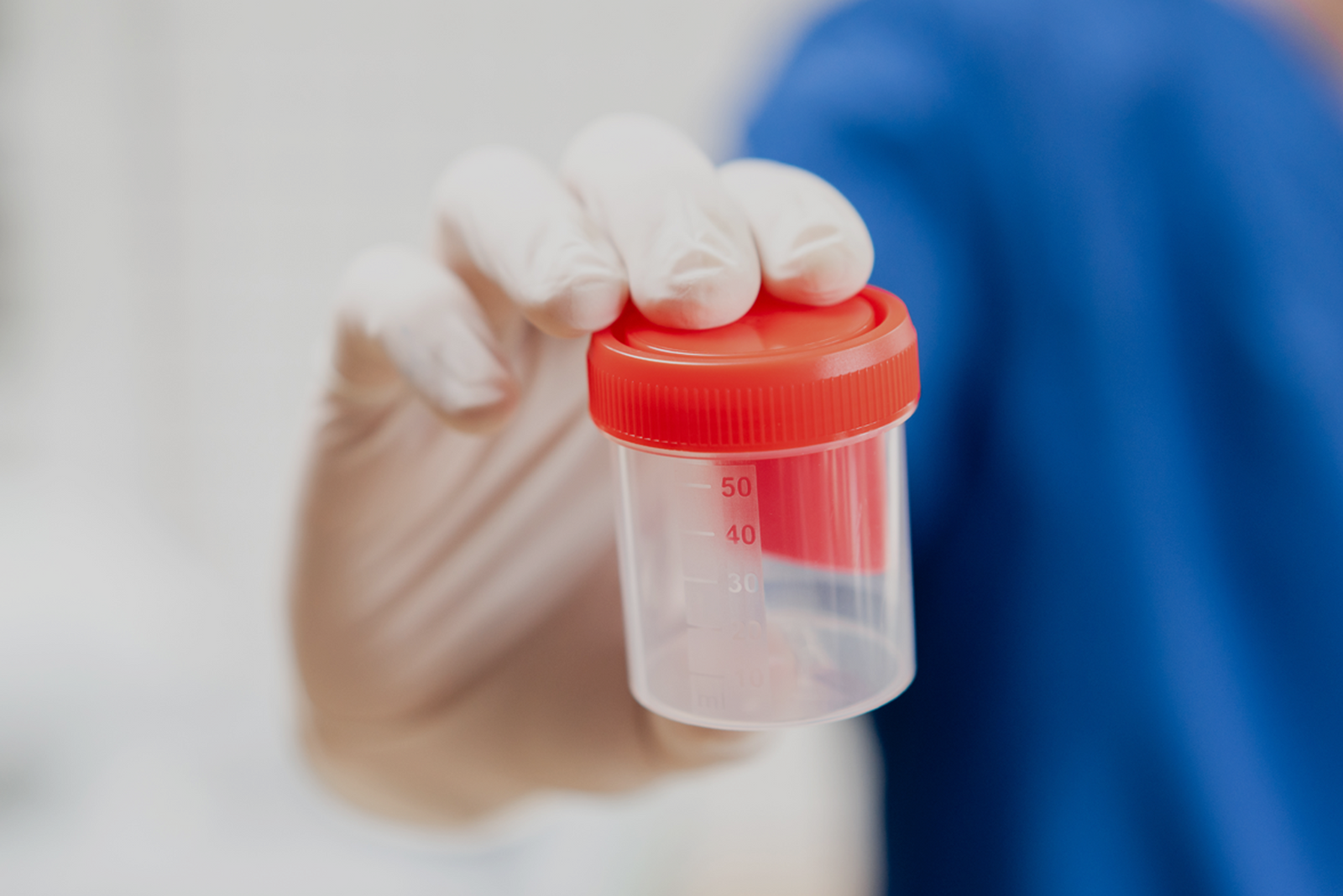

Learn which substances the MMC drug test looks for, plus how masking agents and false positives factor in.


Discover the five most common mistakes mariners make on the captain’s license physical, plus a checklist for how to avoid them.
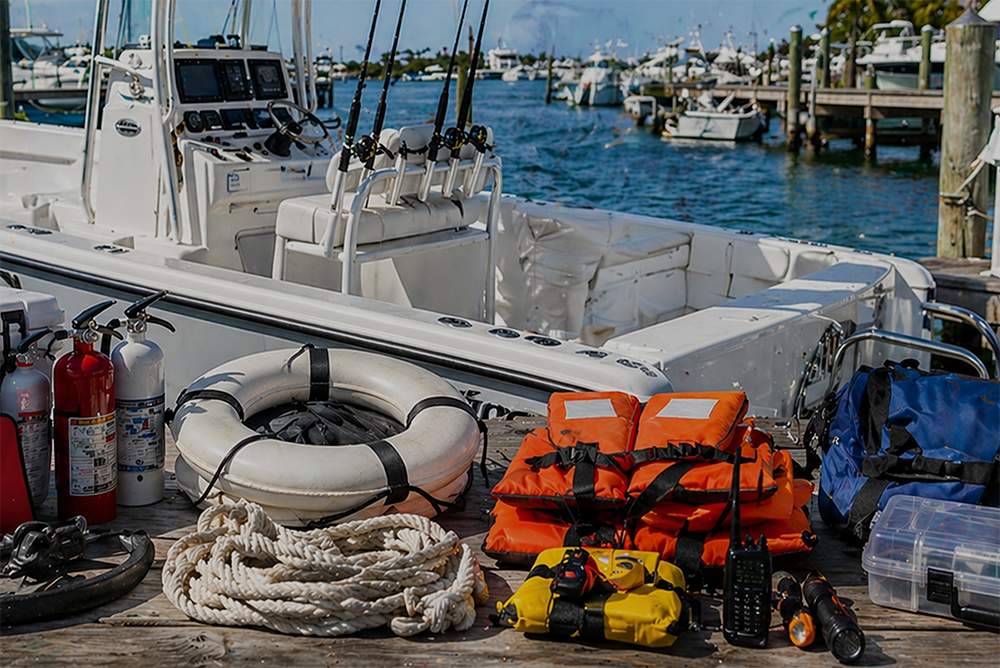

Discover why so many charter captains run out of money and how to plan every startup cost from your vessel purchase to guest-ready outfitting.

Learn how to build a charter business plan that covers pricing, expenses, and marketing so your captain’s license leads to lasting profit.

Transform how you talk about price with proven anchoring strategies and value-first framing that stops charter guests from shopping around.

Discover how charter captains use hybrid pricing models and seasonal adjustments to increase revenue and simplify bookings for every guest type.