

Meet Navi: Your 24/7 AI Instructor Inside the MLS Classroom
Unlock 24/7 access to Navi, an AI instructor trained on MLS course material, so you can ask questions, run practice quizzes, and nail your captain’s exam.
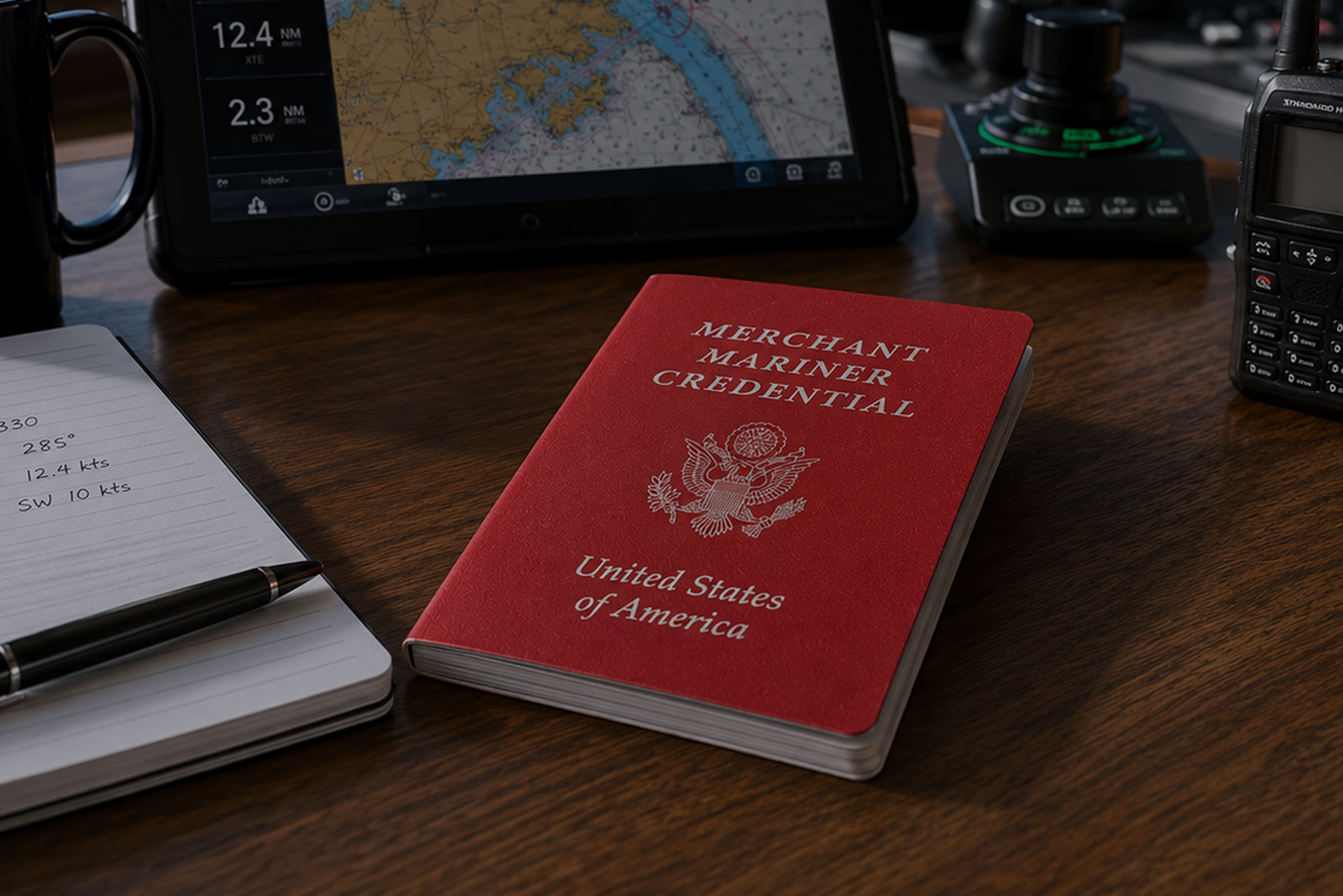

A USCG captain’s license is a Merchant Mariner Credential (MMC) issued by the U.S. Coast Guard through the National Maritime Center. It authorizes you to operate vessels commercially and carry passengers for hire. It’s recognized nationwide and stays valid for five years.
If the terms “captain’s license,” “MMC,” and “Merchant Mariner Credential” all seem to point to the same credential, that’s because they do. The wording confuses almost everyone starting out, and that’s normal. You’ve been out of a classroom for years, and the credential has its own vocabulary.
We’ll explain what the license actually is, what it lets you do, and who qualifies in plain terms.
A USCG captain’s license is the everyday name for a Merchant Mariner Credential. A USCG captain’s license is a Merchant Mariner Credential (MMC), the single document the Coast Guard issues to authorize commercial vessel operation and carrying passengers for hire. The U.S. Coast Guard (USCG) issues it through the National Maritime Center (NMC), the office that evaluates mariner applications.
“License” is a legacy word. The modern MMC combines what used to be several separate documents into one credential that lists the vessels, tonnage, and waters you’re qualified for. It’s recognized across all U.S. states and territories.
For a fuller tour of the licenses behind the credential, see our captain’s licenses explained overview.

People mix these up constantly, and the difference matters. A USCG captain’s license is a federal credential for commercial operation, while a boating license is a state-issued safety certificate for recreational use. They serve different purposes and come from different authorities.
A boating license or boater safety card comes from your state and shows you’ve passed a basic safety course. A captain’s license comes from the federal government and lets you operate commercially and carry paying passengers. You don’t need a captain’s license for personal recreational boating, though many boaters earn one anyway for the knowledge and confidence.
Our article on whether you need a license to drive a boat untangles the two.

The license is about commercial use, not boat size. You need a USCG captain’s license, the Merchant Mariner Credential, whenever you operate a vessel commercially or carry passengers for hire. It applies across many operations, not one type of boat.
That includes commercial fishing, charter services, tour and excursion boats, dive boats, and ferry operations. An MMC signals you’ve met the Coast Guard’s training, experience, and medical standards. If you only boat for pleasure, you don’t need one, though plenty of recreational mariners pursue it for the skills.
We also build certificate programs for recreational boaters, covered in our recreational courses overview.
Yes. The two main ones are the OUPV/Six-Pack, for up to six paying passengers on uninspected vessels, and the Master, for inspected vessels and seven or more passengers. The Master is issued for 25, 50, or 100 tons, depending on your experience.
Our guide on decoding USCG licenses compares them side by side.
The Coast Guard sets clear eligibility standards, and meeting them is achievable. Qualifying for a USCG captain’s license means meeting age, citizenship, sea service, medical, and exam requirements set by the Coast Guard. None of them are out of reach for a prepared applicant.
The basics: you must be at least 18 for an OUPV or 19 for a 25-to-200-ton Master, per 46 CFR 11.201. U.S. citizenship is required, with one narrow exception that lets lawful permanent residents earn an OUPV for vessels not documented under U.S. law. You also need documented sea service, a medical exam on Form CG-719K, a Transportation Worker Identification Credential (TWIC), a drug test, and a passing score on the captain’s exam.
Our application requirements checklist lays out every piece.
A Merchant Mariner Credential is valid for five years. Near the end of that term, you renew it, which includes meeting the current medical and sea-service or refresher requirements. Our renewal guide covers the steps and timing.
The credential is valid for five years, and its physical form recently changed. The Merchant Mariner Credential behind your USCG captain’s license is valid for five years and now ships as a single-page document rather than the old passport-style book. The Coast Guard retired the “red book” format, so newer credentials fold or display flat.
When you renew every five years, you confirm you still meet the medical standard and the experience or refresher-training requirement. Keeping the credential current is far easier than letting it lapse and rebuilding from scratch. To see where the credential fits in the full path, read our become a licensed captain guide.
Yes. “Captain’s license” is the common term, and “Merchant Mariner Credential” (MMC) is the official one the NMC uses. The MMC combines the old separate license and documentation into one credential that lists your qualified vessels, tonnage, and waters.
Our licenses explained page has more.
The U.S. Coast Guard issues it through the National Maritime Center (NMC), which evaluates applications and issues credentials. You earn your course Certificate of Completion first, then submit your application package to the NMC. Our application requirements page shows what the package includes.
The vocabulary sounds bigger than the reality. A USCG captain’s license, your Merchant Mariner Credential, is a federal credential you can absolutely earn with the right preparation. Once you see it as a checklist instead of a mystery, the path forward gets clear.
To learn more about safe marine operation of all kinds, find a course that’s right for you with Mariners Learning System. From recreational boating to commercial charters, we detail everything you need to know to keep you, your boat, and your passengers safe on the water. When you’re ready, our getting-started guide points you to the first step.
Ask a question, share an experience, or add a helpful tip related to this article. Comments may appear after review to prevent spam.
Unlock 24/7 access to Navi, an AI instructor trained on MLS course material, so you can ask questions, run practice quizzes, and nail your captain’s exam.


Learn what questions to ask and how to prepare for a captain’s license drug test to ensure you avoid the most common application delays.
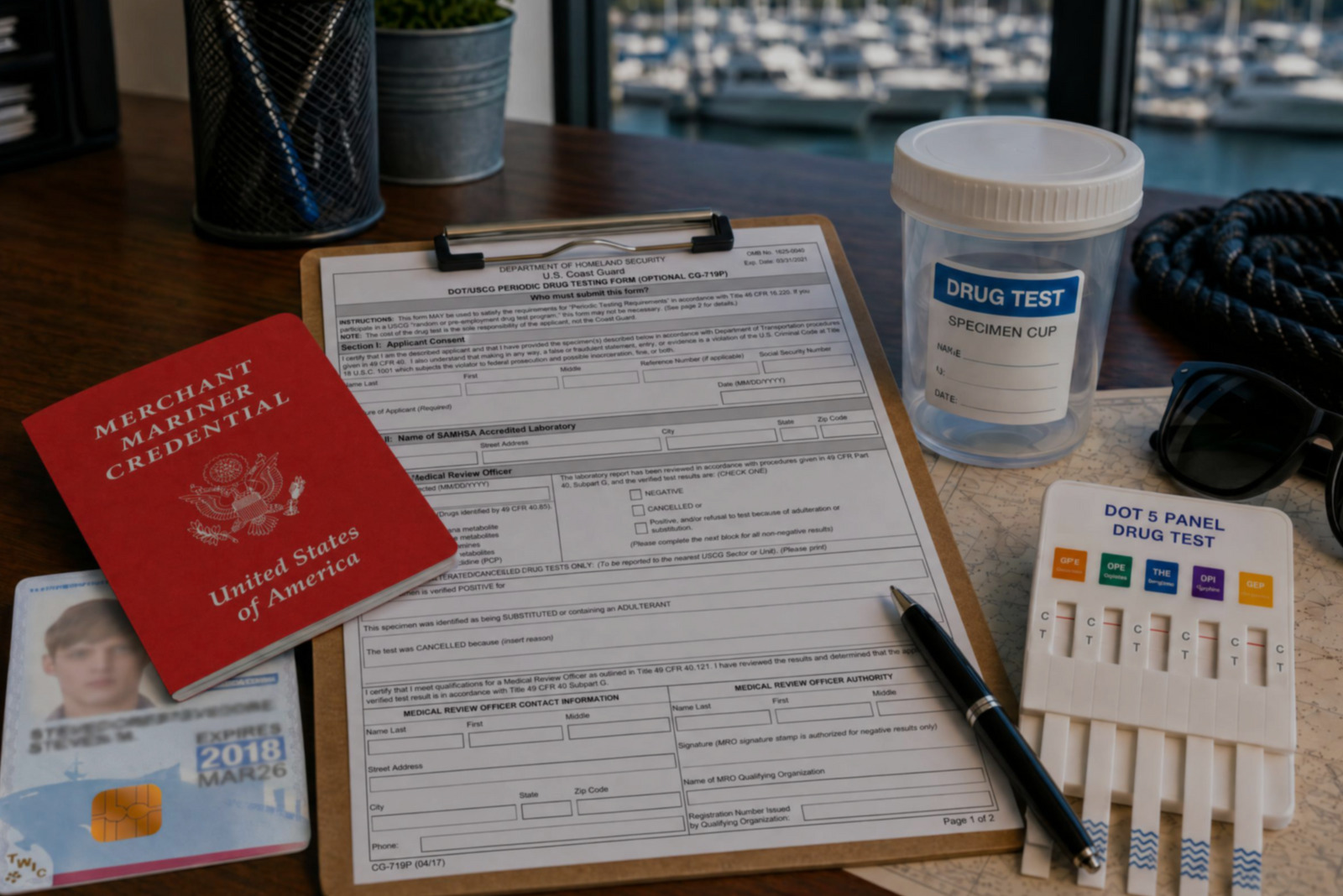

Discover the three types of drug tests working captains must submit to even after they’ve met the initial USCG drug testing requirements for their license.
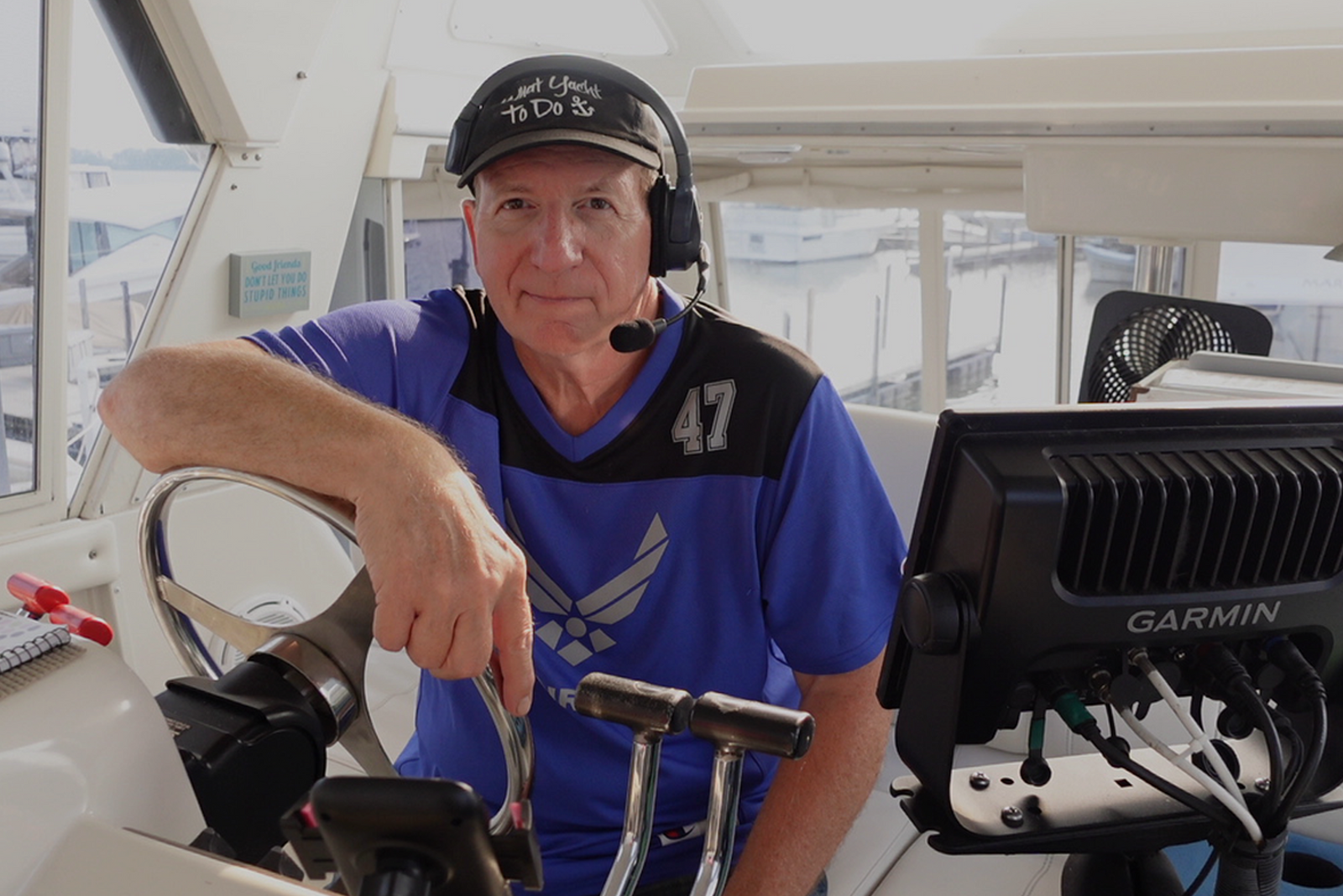

Discover how a retired airline pilot became obsessed with the Great Loop and built a thriving captain training business through Mariners Learning System.


Learn which substances the MMC drug test looks for, plus how masking agents and false positives factor in.


Discover the five most common mistakes mariners make on the captain’s license physical, plus a checklist for how to avoid them.
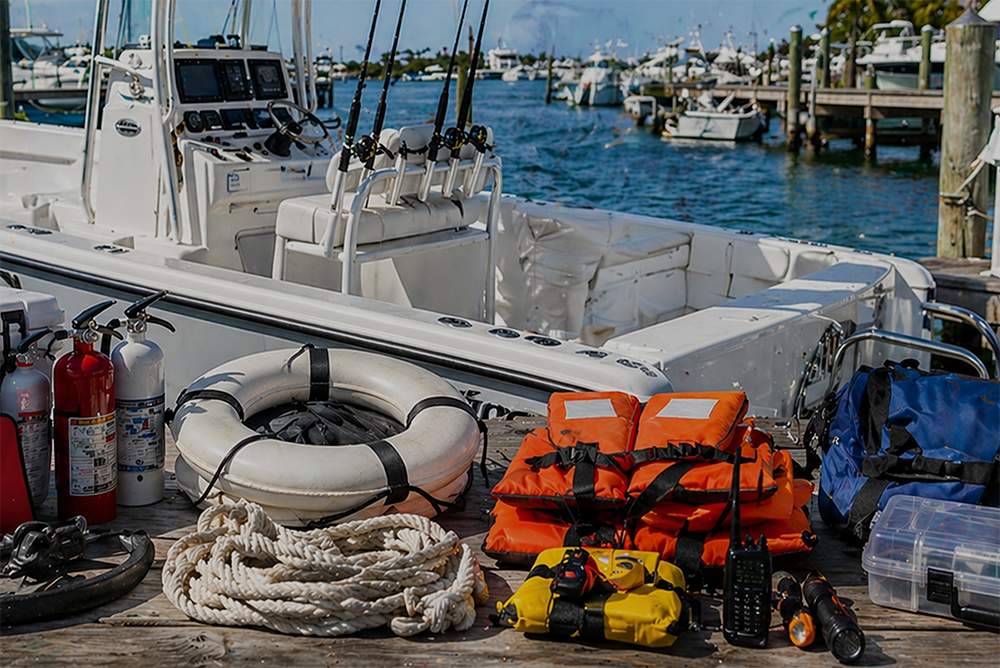

Discover why so many charter captains run out of money and how to plan every startup cost from your vessel purchase to guest-ready outfitting.

Learn how to build a charter business plan that covers pricing, expenses, and marketing so your captain’s license leads to lasting profit.

Transform how you talk about price with proven anchoring strategies and value-first framing that stops charter guests from shopping around.

Discover how charter captains use hybrid pricing models and seasonal adjustments to increase revenue and simplify bookings for every guest type.