

Meet Navi: Your 24/7 AI Instructor Inside the MLS Classroom
Unlock 24/7 access to Navi, an AI instructor trained on MLS course material, so you can ask questions, run practice quizzes, and nail your captain’s exam.
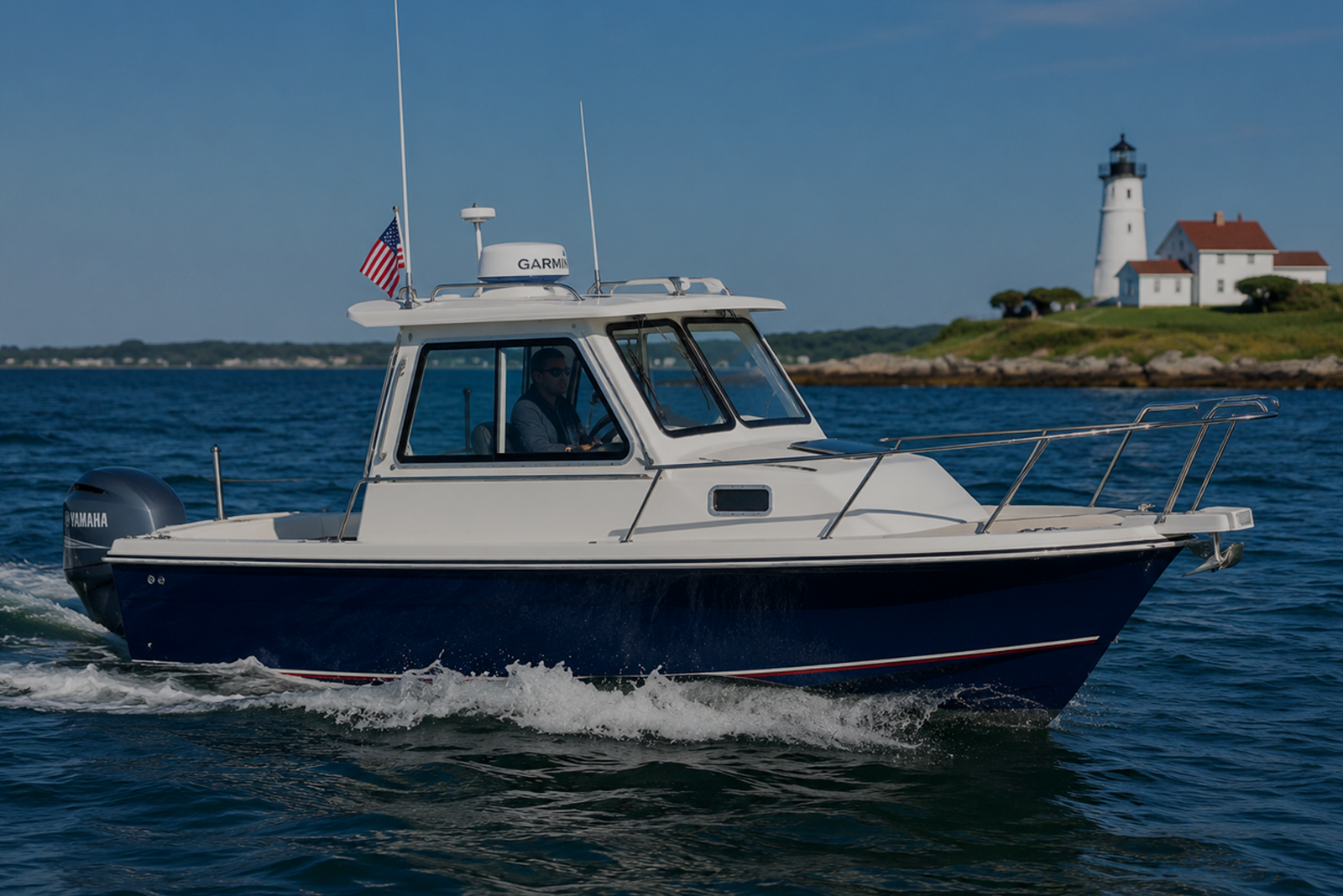

Form CG-719S, the Small Vessel Sea Service form, documents your time on the water for a USCG captain’s license. Complete one form per vessel, each covering up to five years, and record your underway days by month. Federal rule 46 CFR 10.232 sets the evidence each form must contain.
Your sea time only counts if you can document it, and the Coast Guard has a specific form for that job. Get the form right and your experience sails through.
Leave a field blank or claim the wrong role and the Coast Guard rejects the form, along with the sea service credit you were counting on. Here's how to complete Form CG-719S so your days on the water actually count.

The CG-719S is the form you use to prove the time you’ve spent operating boats, the experience the Coast Guard calls sea service. The Small Vessel Sea Service form (CG-719S) records your boating experience on vessels of 200 GRT (gross registered tons) or less, which covers nearly every recreational boat a captain’s license applicant has run. For vessels over 200 GRT, the Coast Guard uses a different documentation method.
You don’t need official logbooks or court-stamped records to fill it out. Record your days as accurately as you can recall. If you do have records, use them to reconstruct your time.
You can download the form and read more about how we help you document your sea time before you start.
Download the Small Vessel Sea Service Form (CG-719S) as a PDF, then complete it in a free PDF reader or print it, fill it in by hand, and scan it back to PDF. Save the file with your last name, first name, and the form number so your packet stays organized.
One form covers one vessel for up to five years, so the count depends on how many boats you’ve run and over how long. You complete a separate Small Vessel Sea Service form for each vessel you claim, and a single vessel claimed over more than five years needs more than one CG-719S. A 10-year span on one boat, for example, takes two forms.
This rule catches people who try to combine boats. Multiple vessels listed on one form get the whole form rejected.
If you’re still working out how much time you’ve earned, our breakdown of what counts as sea service walks through the qualifying experience.
Two forms, one per vessel, even if the years overlap. Each CG-719S documents a single vessel. Time on a second boat always goes on its own form.

Federal regulation 46 CFR 10.232 spells out the evidence your form must contain, and missing any of it is grounds for rejection. For your small vessel sea service to count, each CG-719S must list the vessel name and official or state registration number, the gross tonnage, the propulsion power and mode, the amount and nature of your experience, the waters you operated on, and your approximate dates of service. Read every field and complete all of them.
A few specifics matter. For tonnage credit above 25 GRT, supply the vessel’s gross tonnage, or give length, width, and depth so the Coast Guard can calculate it. Describe your waters precisely, naming a bay, sound, or landmark rather than writing “Atlantic Ocean.”
Here’s what each form has to carry.
|
Required Field |
What to Enter |
Common Error to Avoid |
|
Vessel Name and Number |
Documented name plus official or state registration number |
Inventing or guessing a registration number |
|
Gross Tonnage |
The vessel’s GRT (a general formula you can follow is (Length x Width x Depth x 0.67) ÷ 100) |
Leaving tonnage blank when claiming over 25 GRT |
|
Propulsion |
Power and mode (and propulsion type for sailing endorsements) |
Omitting propulsion when seeking a sailing endorsement |
|
Capacity Served |
If you were working professionally, indicate the service department (deck, steward, or engine); if multiple departments are listed, service time will be divided equally unless broken down specifically |
Listing “owner” as a position (this is not an acceptable role; an alternative can be “operator”) |
|
Waters |
Be specific (e.g., Chesapeake Bay), mention buoys, landmarks, or other descriptive features |
Writing only “Atlantic Ocean” or mismatching the waters |
|
Dates of Service |
Approximate month-and-year coverage per vessel |
Mixing two vessels on a single form and using hours, not days-months-years |
For more on how the rules apply to your situation, see our overview of sea service requirements.
If the vessel is undocumented and has no name, you may leave the name field blank, but a third party (not you) attests to the form. You still provide an official or state registration number so the Coast Guard can identify the vessel. If you have questions about what numbers are the vessel’s identifying numbers, contact the National Maritime Center.
Section III: Signature and Verification is where the applicant documents their sea service experience by attesting to the accuracy of the information provided. This section must be signed by both the applicant and the vessel owner, operator, or master. If the applicant is the vessel owner, proof of ownership, such as state registration, vessel documentation, proof of insurance, or a bill of sale, must be included.
The applicant will always sign and date this section. If the applicant owns the vessel, proof of ownership should clearly indicate the applicant’s name and the vessel’s official or state registration number. If the vessel is owned by a company, proof of the company’s ownership, such as articles of incorporation, must be provided.
If the applicant is not the vessel owner, the owner, operator, or master must sign, date, and provide their address and phone number. If the applicant is the master of the vessel but not the owner, they cannot attest to their own service. In this case, the vessel owner must complete the days underway section and sign this part of the form, providing their contact details as required.
The country’s boundary lines can be viewed here. If you are located in the Gulf of America, review this blog post for more specific details.
Look over this guideline document for calculating the tonnage of a vessel on which you are claiming time.
To document sea service time, you must submit a sea service letter completed by the company that employed you or by the vessel on which you served. The letter should clearly list your service dates, vessel information, and position held.
The letter must be on a letterhead from either the company that employed you or the vessel on which you served. Include the date the letter was written. If you are presently serving on the vessel, the date indicated will be used as the end date of your service for evaluation purposes.
For each vessel, the letter must provide:
This information must be provided for each vessel on which you serve and for which you are utilizing this letter to claim service.
For any officer endorsement, the letter must also supply a breakdown of the number of days of service within three years of the date of the letter.
The letter must indicate whether the service was 12- or eight-hour days.
If the service is 12-hour days, it must attest that a two-watch system is authorized by the vessel’s Coast Guard Certificate of Inspection (COI), and the COI must actually authorize it.
Section II of the form works like a calendar: you enter the number of days you were underway in each month and year, then total them. When you record small vessel sea service, count a day by the hours you were actually underway, and break your total into the right water categories so the Coast Guard can credit it.
Under 46 CFR 10.232, a day on a vessel of less than 100 GRT counts as eight hours, and the Coast Guard won’t credit a period of less than four hours as a day. In practice, the National Maritime Center commonly accepts four hours as one day for OUPV/Six-Pack and Master captain’s license applicants.
Follow these steps for Section II:
Most students earn their experience across years of recreational outings. Our guide to how much sea time you need puts your day count in context.
A period of at least four hours counts as one day for an OUPV/Six-Pack or Master captain’s license. Periods under four hours earn no credit. A single calendar day counts once, no matter how many trips you take.
The same errors send forms back again and again, and every one is preventable. The CG-719S mistakes that cost applicants their sea service credit are leaving required fields blank, claiming “owner” as a position, listing engine-room service on a boat with no engine room, putting two vessels on one form, and describing waters that don’t match the service claimed. Catch these before you submit, not after.
Invalid or missing registration numbers are another frequent rejection. So is including information for anyone other than the applicant, as is adding up your time incorrectly.
When you’re ready to package your forms, our application requirements checklist shows where the CG-719S fits with your other forms.

It documents your small vessel sea service, the on-water experience the Coast Guard requires for a captain’s license on vessels of 200 GRT or less. You can see how the credential itself comes together in our guide to submitting your application packet.
This form is only for vessels of 200 GRT or less. For vessels greater than 200 GRT, use an approved alternate method, and this time may not count toward a captain’s license.
Most captain’s license applicants document 360 days of experience, with 90 of those days in the last seven years, per the NMC checklist. The CG-719S is where you record those days.
Yes, record it on a CG-719S for that vessel. If you don’t own the boat, the owner attests to your service. If you own a vessel under 200 GRT, you may attest to your own time and provide proof of ownership.
A day is eight hours on a vessel under 100 GRT, though four hours counts as one day for an OUPV/Six-Pack or Master license. No period under four hours earns credit, and a calendar day counts only once.
The Coast Guard returns the form and the sea service credit tied to it, and you resubmit a corrected version. Most rejections come from blank fields, a disallowed “owner” entry, or mismatched waters, so a careful review before submission is the fix.
Years of time on the water don’t count with the Coast Guard until they’re written down correctly. Treat each CG-719S small vessel sea service form like the record it is: one vessel per form, every field complete, your days counted honestly and broken out by water. Do that, and your hard-earned experience moves your application forward instead of holding it up.
From here, fill out a form for each boat you’ve run, check it against the required fields above, and set it with the rest of your packet. Need help fitting it into the full picture? See how it connects to the captain’s license timeline.
If you have questions about Form CG-719S or any other part of the application process, the team at Mariners Learning System is here to help. We’ve guided more than 200,000 students through this process, and we’re not going to let paperwork be the reason you don’t get your license.
Ask a question, share an experience, or add a helpful tip related to this article. Comments may appear after review to prevent spam.
Unlock 24/7 access to Navi, an AI instructor trained on MLS course material, so you can ask questions, run practice quizzes, and nail your captain’s exam.


Learn what questions to ask and how to prepare for a captain’s license drug test to ensure you avoid the most common application delays.
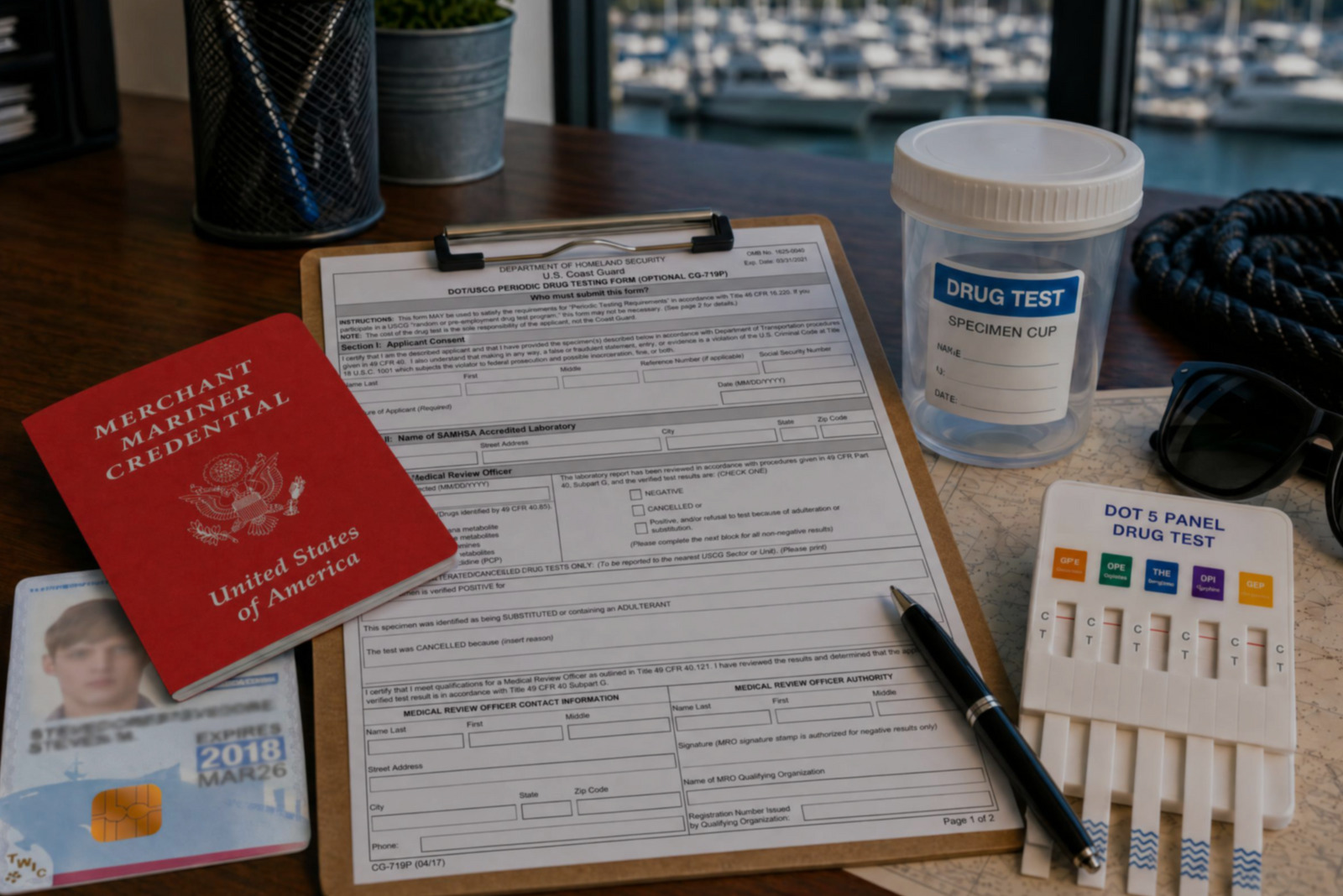

Discover the three types of drug tests working captains must submit to even after they’ve met the initial USCG drug testing requirements for their license.
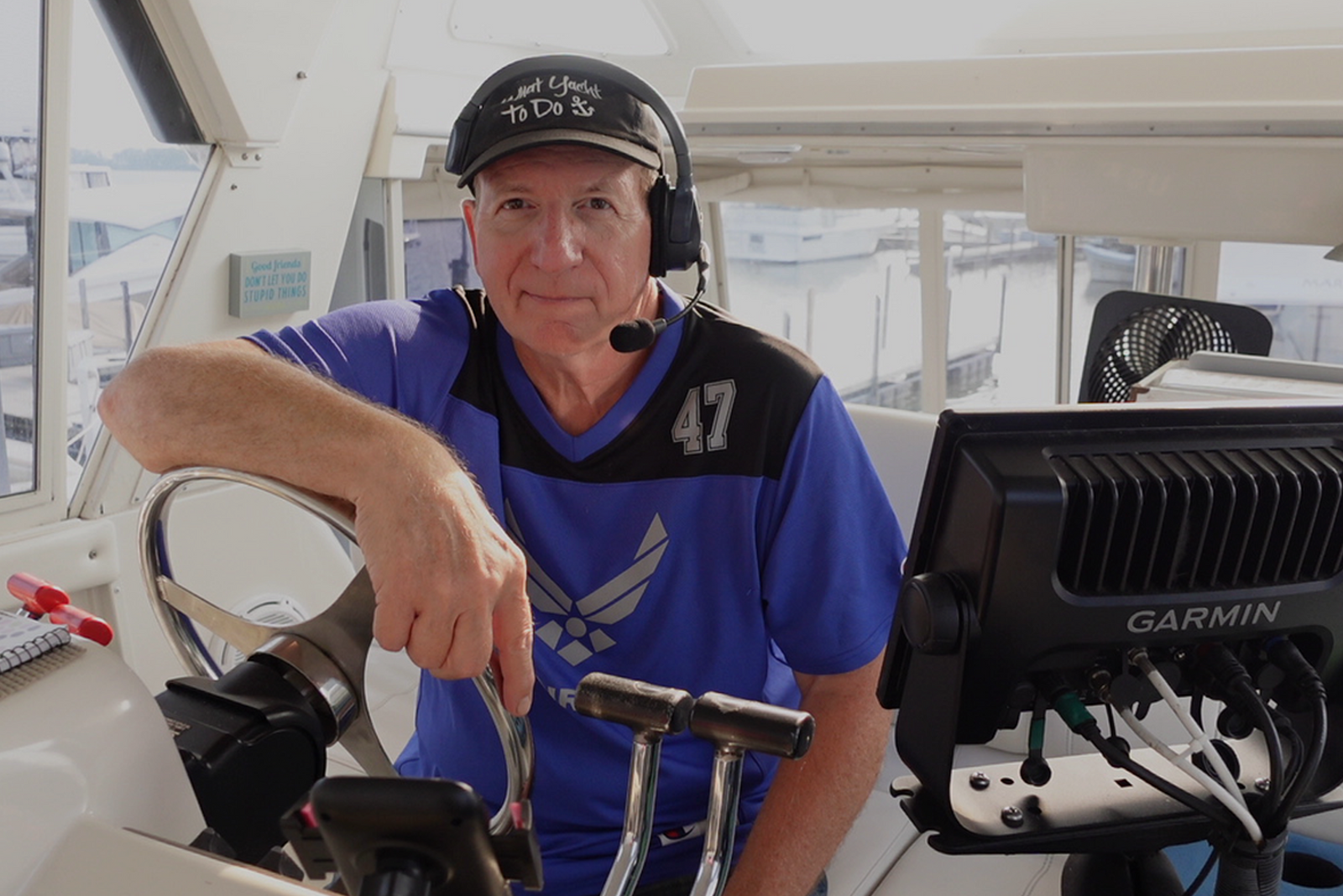

Discover how a retired airline pilot became obsessed with the Great Loop and built a thriving captain training business through Mariners Learning System.


Learn which substances the MMC drug test looks for, plus how masking agents and false positives factor in.


Discover the five most common mistakes mariners make on the captain’s license physical, plus a checklist for how to avoid them.

Discover why so many charter captains run out of money and how to plan every startup cost from your vessel purchase to guest-ready outfitting.

Learn how to build a charter business plan that covers pricing, expenses, and marketing so your captain’s license leads to lasting profit.

Transform how you talk about price with proven anchoring strategies and value-first framing that stops charter guests from shopping around.

Discover how charter captains use hybrid pricing models and seasonal adjustments to increase revenue and simplify bookings for every guest type.